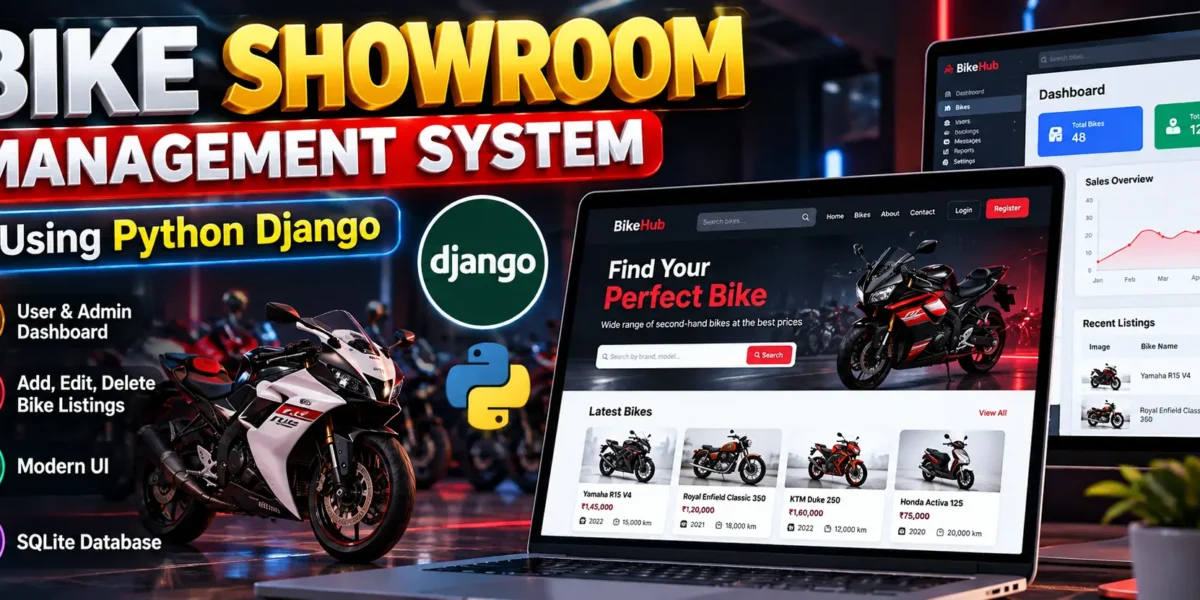
Bike Showroom Management System Using Python Django
The Bike Showroom Management System Using Python Django is a full-stack web application developed to simplify the management of second-hand bike listings, user accounts, and bike-selling activities. The project uses Python and Django for backend development and SQLite for database management, making it easy to configure and run locally.
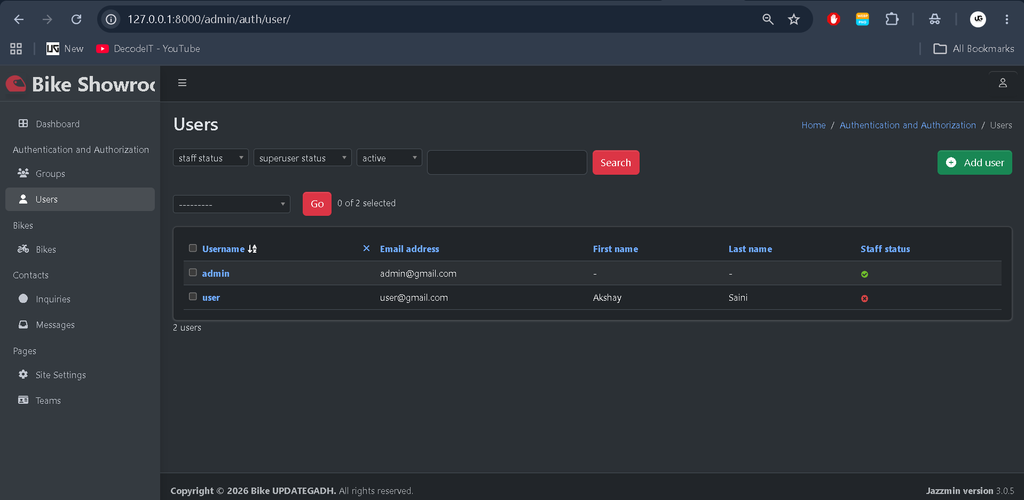
The system provides separate functionalities for users and administrators. Registered users can add, edit, and delete their bike listings, while administrators can manage users and monitor platform activities. With a personalized user dashboard, CKEditor integration, and a customized Jazzmin admin interface, this project demonstrates the practical implementation of Django in a used-bike marketplace.
Table of Contents
Complete Advance AI Topics: Click Here
Real Time Projects on YouTube:- DecodeIT
Project Overview
| Project Details | Description |
|---|---|
| Project Name | Bike Showroom Management System |
| Language/s Used | Python, Django |
| Database | SQLite |
| Frontend | HTML, CSS, JavaScript |
| Backend | Python Django |
| Type | Full-Stack Web Application |
Available Features
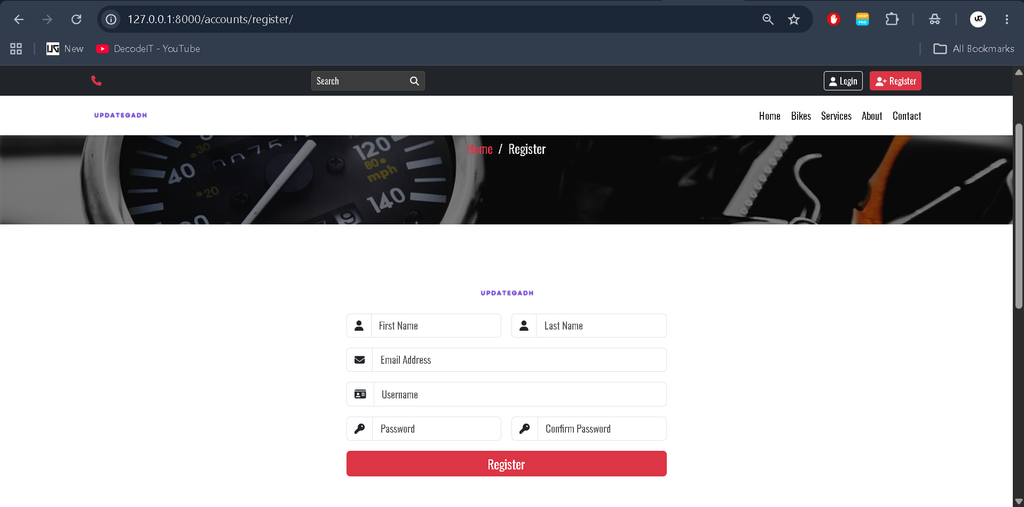
- User Registration and Login: Allows users to create accounts and securely access their account features.
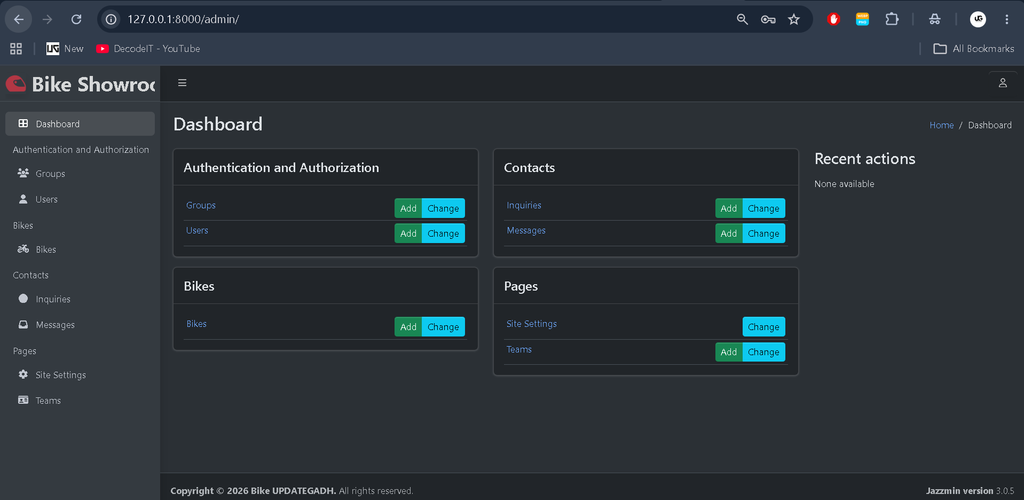
- Admin Panel: Enables administrators to manage users, oversee bike listings, and maintain platform operations.
- Bike Listing Management: Allows registered users to add, edit, and delete second-hand bike listings.
- User Dashboard: Provides a personalized dashboard for managing bike listings and account activities.
- Bike Details Management: Supports detailed bike descriptions to help sellers present relevant vehicle information.
- CKEditor Integration: Provides rich-text formatting for bike descriptions.
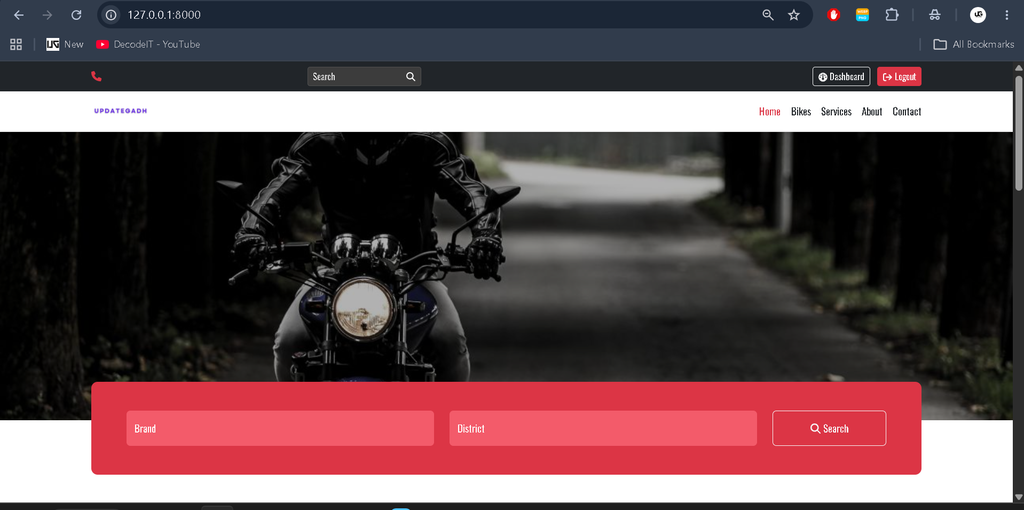
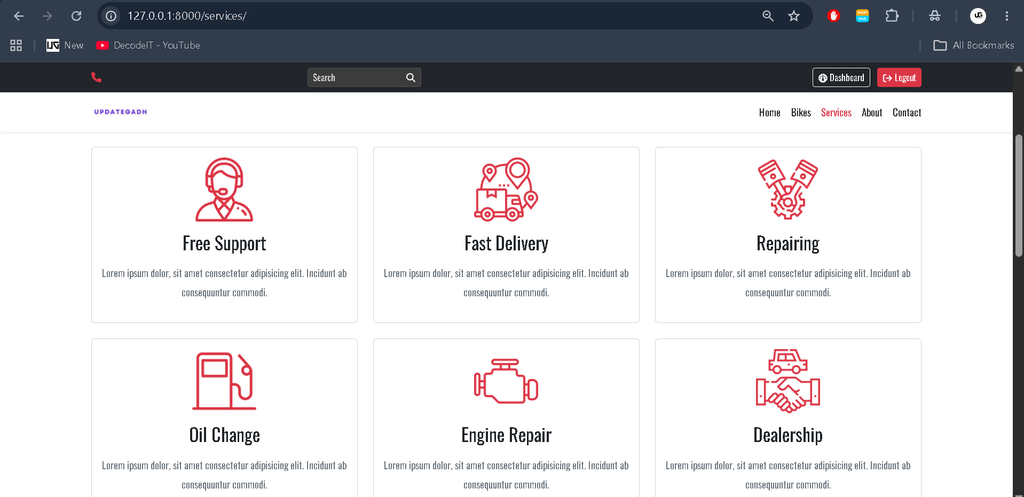
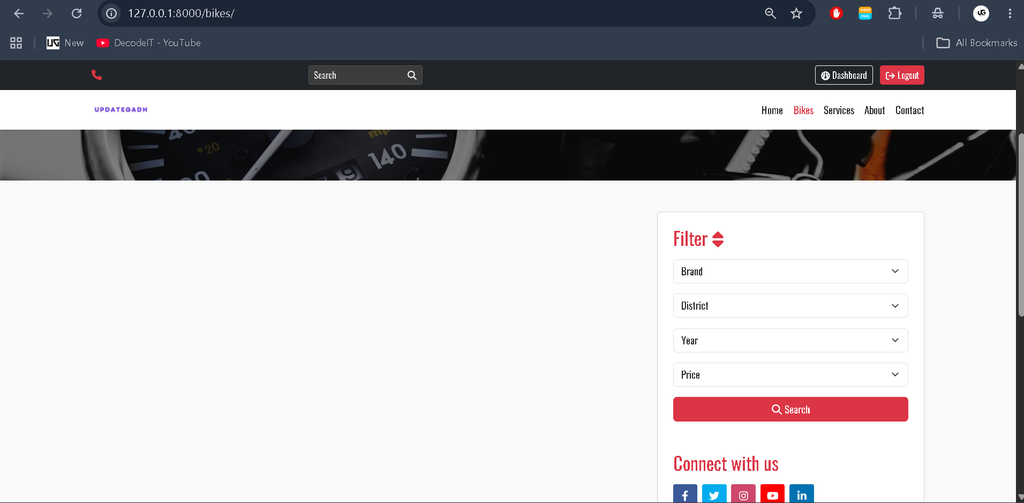
- Dynamic Homepage: Displays available bike listings for visitors.
- Role-Based Permissions: Separates user and administrator functionality according to assigned permissions.
- Email Configuration: Supports SMTP email functionality when properly configured.
- Jazzmin Admin Theme: Enhances the appearance and usability of the Django administration panel.
- SQLite Database: Stores application data in a lightweight database without requiring a separate database server.
Technology Stack
- Frontend: HTML, CSS, JavaScript
- Backend: Python and Django
- Database: SQLite
- Admin Interface: Django Admin with Jazzmin
- Rich-Text Editor: CKEditor
- Development Environment: Visual Studio Code
Software Requirements
- Python 3.11 or higher
- Visual Studio Code
- Modern web browser
- Python packages listed in
requirements.txt
How to Download
The complete package is available so you can run, study, and submit it with confidence. It includes:
- Full Source Code
- Project Report
- Synopsis
- PPT Presentation
Screenshot
Installation Guide
Step 1: Open the Project
Extract the project ZIP file and open its root folder in Visual Studio Code. Open the integrated terminal in the project directory.
Step 2: Create a Virtual Environment
python -m venv envActivate the environment on Windows:
env\Scripts\activateStep 3: Install Dependencies
python -m pip install --upgrade pip
pip install -r requirements.txt
Step 4: Configure SQLite Database
Django supports SQLite by default. Open settings.py and verify that the database configuration is set to SQLite:
DATABASES = {
    'default': {
        'ENGINE': 'django.db.backends.sqlite3',
        'NAME': BASE_DIR / 'db.sqlite3',
    }
}
This configuration stores database records in the db.sqlite3 file inside the project directory. No separate database server is required.
Step 5: Apply Database Migrations
python manage.py makemigrations
python manage.py migrate
Step 6: Create a Superuser
python manage.py createsuperuserEnter the requested username, email address, and password to create the administrator account.
Step 7: Configure Email (Optional)
If the project uses email notifications, configure the SMTP settings in settings.py using the credentials of your email provider or a local SMTP testing server.
Step 8: Run the Project
python manage.py runserverOpen http://127.0.0.1:8000/ in your browser to access the application. The administration panel is generally available at http://127.0.0.1:8000/admin/.
Usage
Users: Users can register, log in, access their dashboard, publish bike listings, update bike details, and delete their own listings according to the permissions implemented in the project.
Administrators: Administrators can access the Django admin panel to manage registered users, oversee bike listings, and maintain application data.
Frequently Asked Questions (FAQs)
1. What is the Bike Showroom Management System?
The Bike Showroom Management System is a web application developed using Python Django that helps manage second-hand bike listings, user accounts, and administrative activities.
2. Which technologies are used in this project?
The project uses Python and Django for backend development, HTML, CSS, and JavaScript for the frontend, and SQLite for database management.
3. Which database is used in the Bike Showroom Management System?
The project uses SQLite, a lightweight database that stores application data in a local database file without requiring a separate database server.
4. What are the main features of this project?
The main features include user registration and login, bike listing management, user dashboards, an admin panel, CKEditor integration, role-based permissions, and a customized Django administration interface.
5. Can users add and manage their own bike listings?
Yes, registered users can add bike listings, update bike information, and delete their own listings according to the permissions implemented in the application.
6. What is the role of the administrator?
The administrator can manage registered users, oversee bike listings, and maintain application data through the Django admin panel.
7. Is the Bike Showroom Management System suitable for beginners?
Yes, this project is suitable for students and beginners who want to learn Django development, database integration, authentication, CRUD operations, and web application management.
8. What software is required to run this project?
You need Python 3.11 or higher, Visual Studio Code or another code editor, a web browser, and the required Python packages listed in the project’s requirements.txt file.
9. How can I run the Bike Showroom Management System locally?
Install the required dependencies, configure the SQLite database, run database migrations, create a superuser account, and execute python manage.py runserver. Then open http://127.0.0.1:8000/ in your browser.
10. Can the Bike Showroom Management System be customized?
Yes, developers can customize the interface, add bike search and filtering, improve listing management, introduce additional features, and enhance security according to their requirements.
Final Thoughts
The Bike Showroom Management System Using Python Django is a practical project for students who want to understand full-stack web development, database integration, authentication, and CRUD operations. SQLite makes local installation straightforward, while Django provides a structured foundation for developing and extending a used-bike marketplace.
Keywords: Bike Showroom Management System Using Python Django, bike showroom management system SQLite, Django bike selling project, second-hand bike management system, Python Django project