
SQL ORDER BY RANDOM
Fetching random records is essential for dynamic content random articles, featured products, quiz questions, or recommendations. Every major database has its own approach. This guide gives you the exact syntax for each one.
Table of Contents
Complete Advance AI Topics: Click Here
SQL Tutorial: Click Here
Common Use Cases
- Random articles or blog posts.
- Featured products in e-commerce.
- Random quiz questions or test cases.
- Suggested items for users.
Cross-Database Syntax
-- MySQL
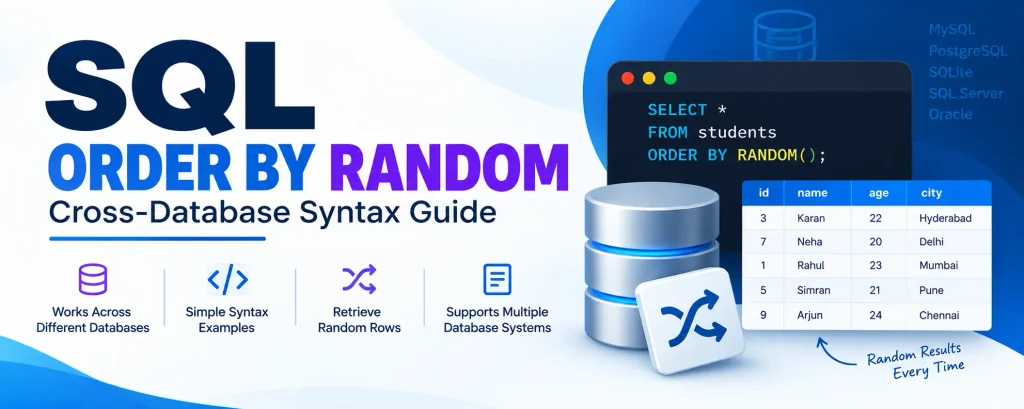
SELECT column FROM table ORDER BY RAND() LIMIT 1;

-- PostgreSQL
SELECT column FROM table ORDER BY RANDOM() LIMIT 1;

-- SQL Server
SELECT TOP 1 column FROM table ORDER BY NEWID();

-- Oracle
SELECT column FROM (
  SELECT column FROM table ORDER BY dbms_random.value
) WHERE rownum = 1;

-- IBM DB2
SELECT column, RAND() AS IDX FROM table
ORDER BY IDX FETCH FIRST 1 ROWS ONLY;
Practical Example: Random Product (MySQL)
SELECT * FROM products
ORDER BY RAND()
LIMIT 1;
Each execution returns a different row because RAND() assigns a fresh random value per row.
Fetch All Records in Random Order
SELECT * FROM products ORDER BY RAND();Performance Tip
On large tables, ORDER BY RAND() is slow because it generates a random value per row and sorts everything. For big datasets, pick a random ID within the range or use TABLESAMPLE if your DB supports it.
Download New Real Time Projects:- Click here
Complete Advance AI topics:-
Conclusion
Fetching random rows is straightforward once you know each database syntax. Use the correct function for your DBMS and watch for performance on large tables. For more SQL guides, visit .
sql order by random postgresql
mysql order by random
sql order by random seed
sqlite order by random
snowflake sql order by random
oracle order by random
sql order by newid()
sql random row


