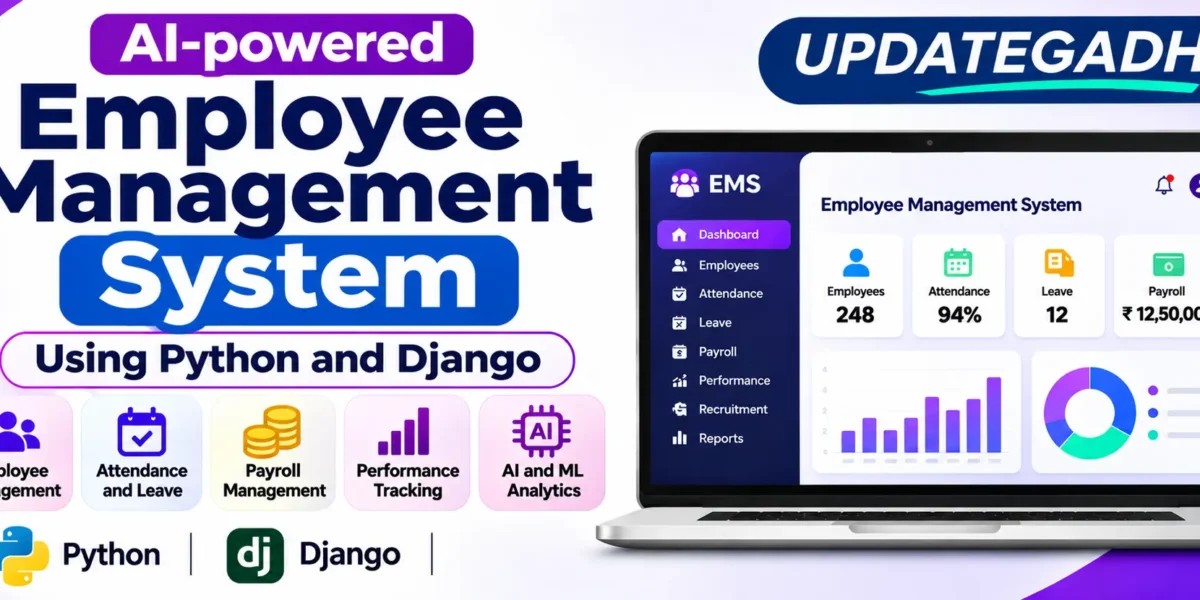
Employee Management System is a web-based application designed to simplify and organize human resource activities within an organization. The Employee Management System provides a centralized platform for managing employee records, recruitment, attendance, leave requests, payroll, performance, communication, and other HR operations.
Developed using Python, Django 5, and SQLite, the Employee Management System combines modern web technologies with Artificial Intelligence, Machine Learning, and Natural Language Processing. It includes five separate role-based workspaces for Admin, HR Manager, Recruiter, Department Manager, and Employee, each with its own layout and colour palette. The Employee Management System also integrates Scikit-learn, TF-IDF, LSA embeddings, Logistic Regression, and IsolationForest to support resume analysis, candidate ranking, employee attrition prediction, forecasting, anomaly detection, and HR assistance.
Real Time Projects on YouTube:- DecodeIT
What Is the Employee Management System?
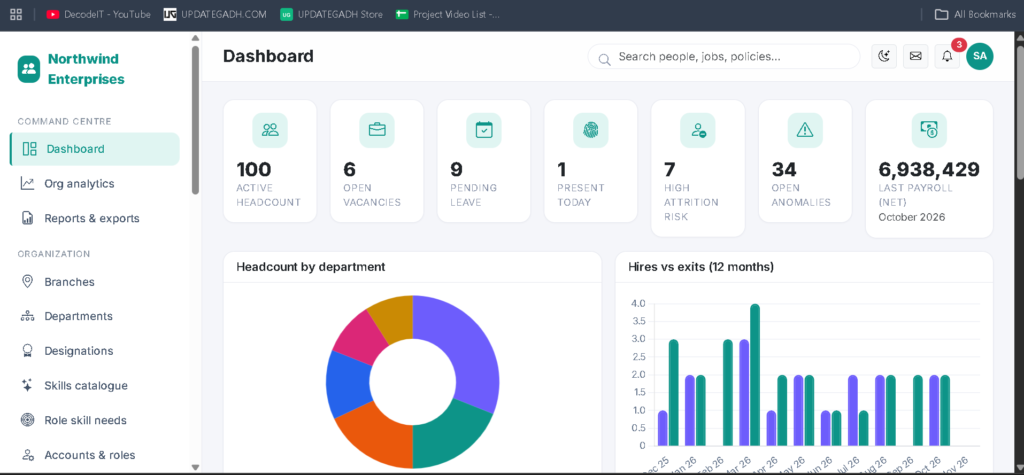
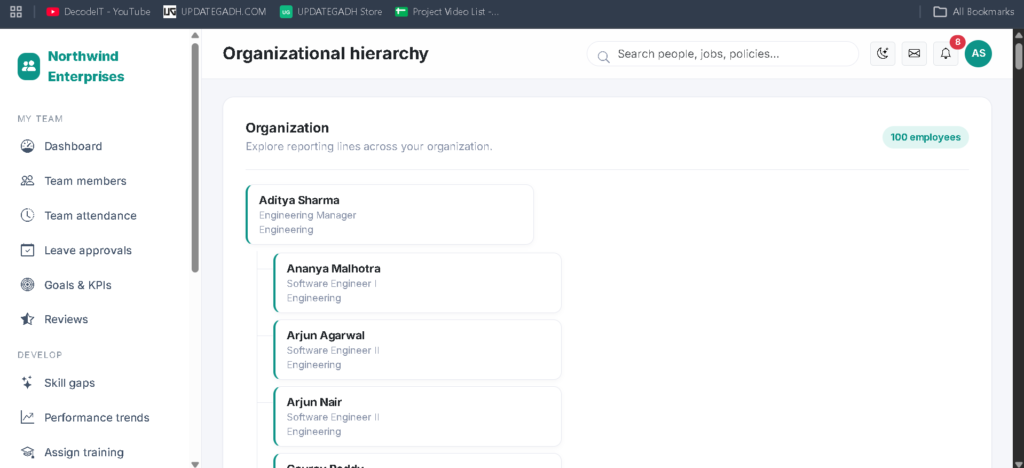
The Employee Management System is a Django-based application designed to manage different stages of the employee lifecycle. It provides separate dashboards for different organizational roles, allowing users to access functionality according to their responsibilities.
The Employee Management System helps organizations manage employee information, recruitment activities, attendance, leave, payroll, performance reviews, training, and communication through one centralized platform.
What Are the Main Features of the Employee Management System?
The Employee Management System provides the following features for managing human resource activities.
Admin Module:
- Organization Analytics: Monitor organizational information and analytics through the administration dashboard.
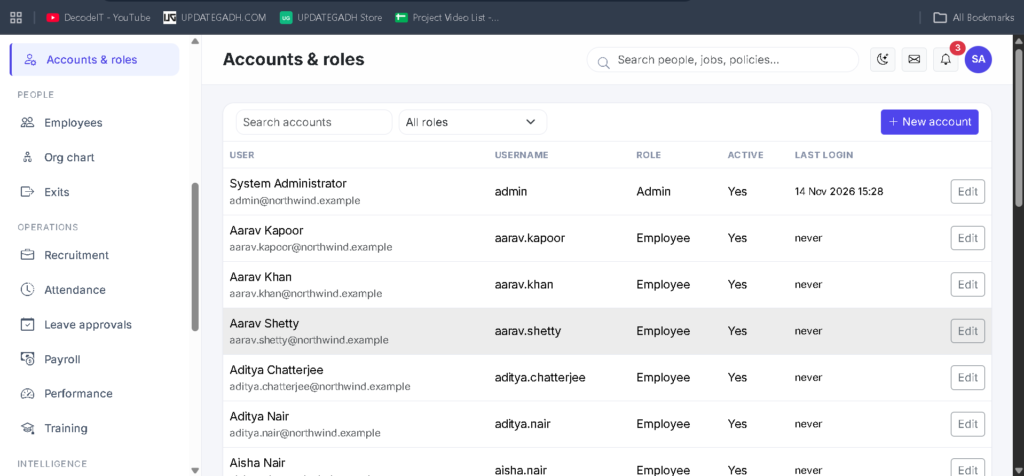
- Account Management: Manage user accounts and access information.
- Permission Matrix: Manage permissions for different user roles.
- Workflow Management: Access and manage organizational workflows.
- Audit Log: Monitor recorded application activities.
- System Settings: Manage application settings.
HR Manager Module:
- Employee Management: Manage employee information and records.
- Exit Management: Handle employee exits and related processes.
- Attendance Management: Monitor employee attendance.
- Leave Management: Manage employee leave requests and balances.
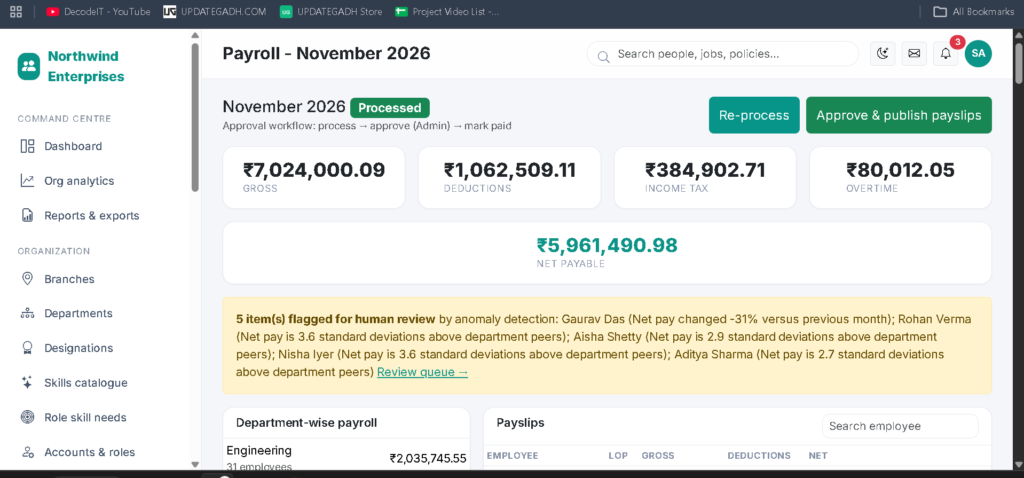
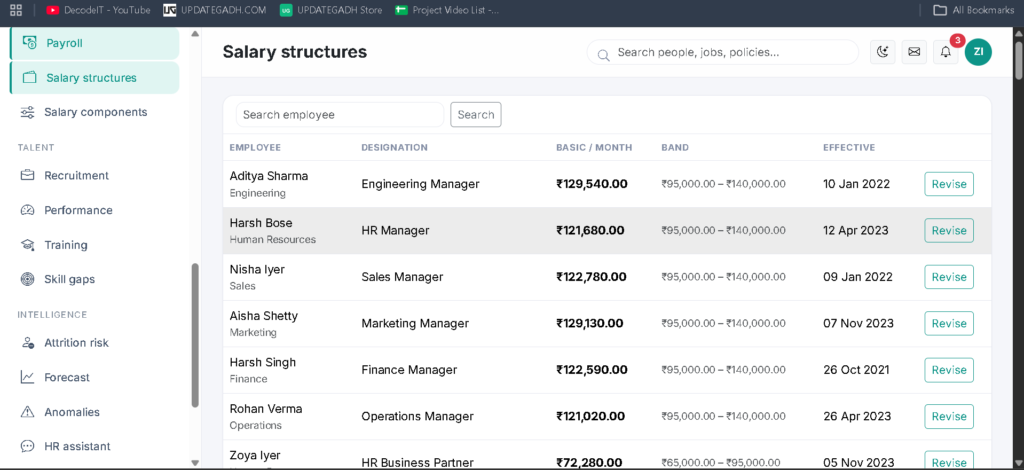
- Payroll Management: Handle payroll activities.
- Performance Management: Manage employee performance information.
- Attrition Analysis: Access employee attrition predictions.
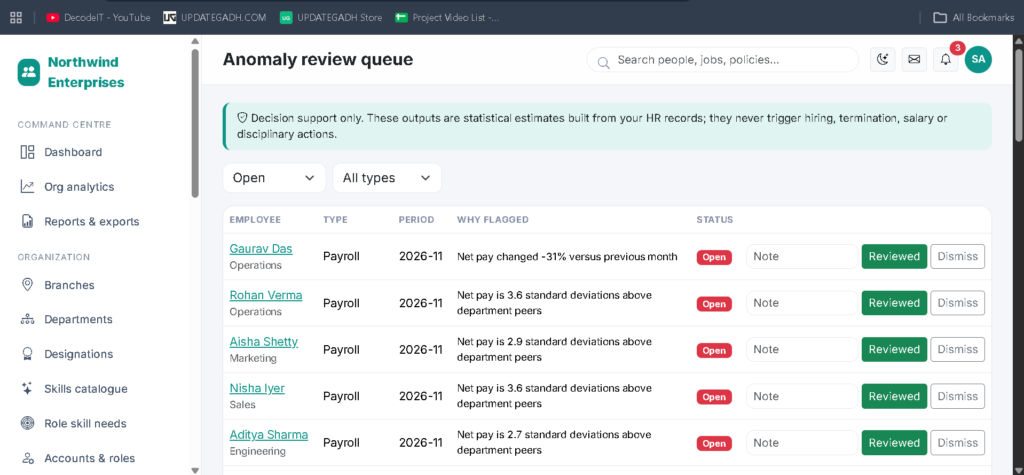
- Anomaly Detection: Review detected HR-related anomalies.
Recruiter Module:
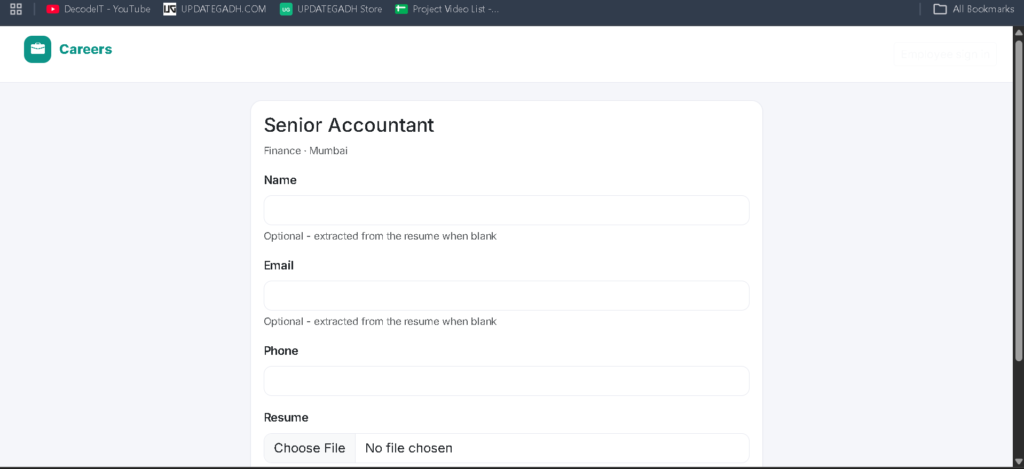
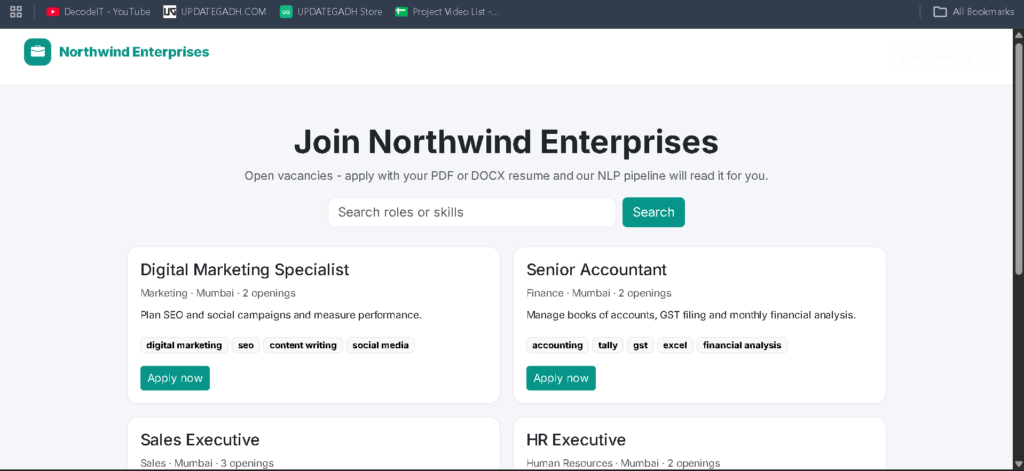
- Vacancy Management: Create and manage job vacancies.
- Resume Parsing: Extract candidate information from uploaded resumes.
- Candidate Ranking: Compare and rank candidates.
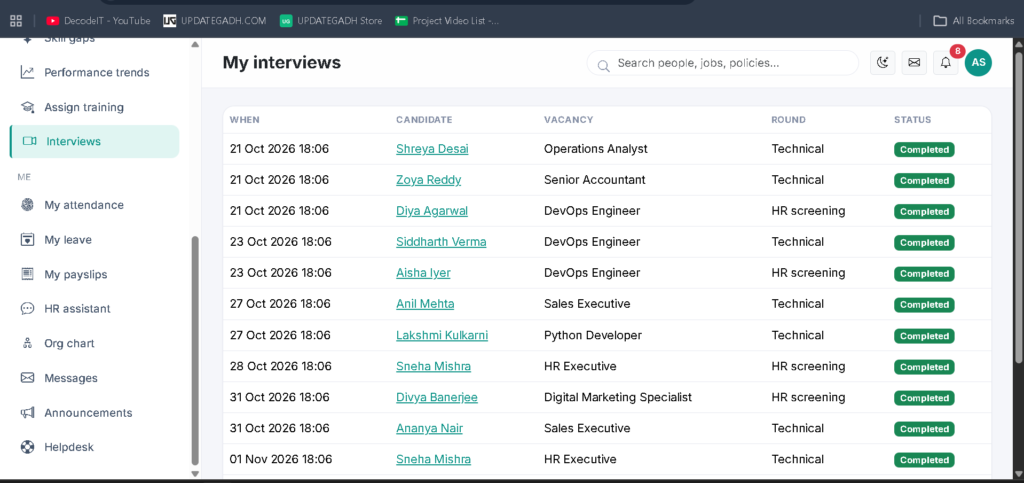
- Interview Management: Manage interview rounds and feedback.
- Offer Management: Generate offer-letter PDFs.
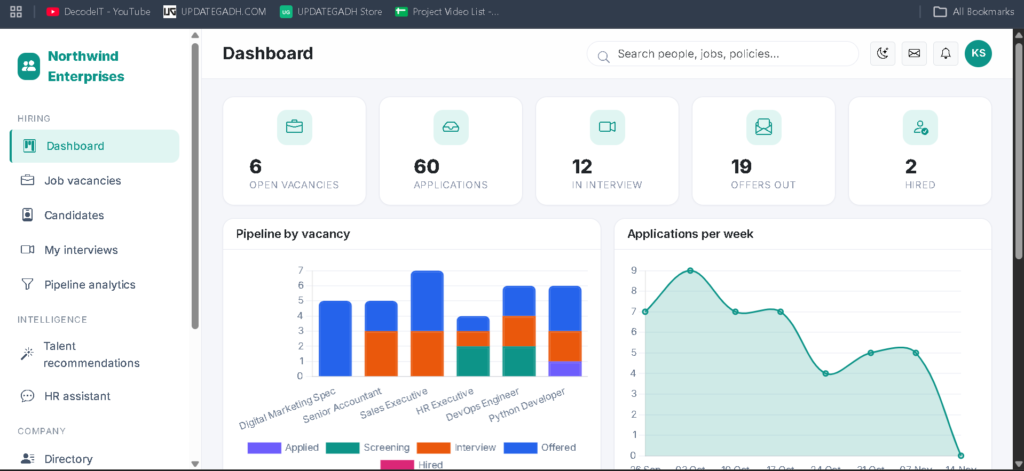
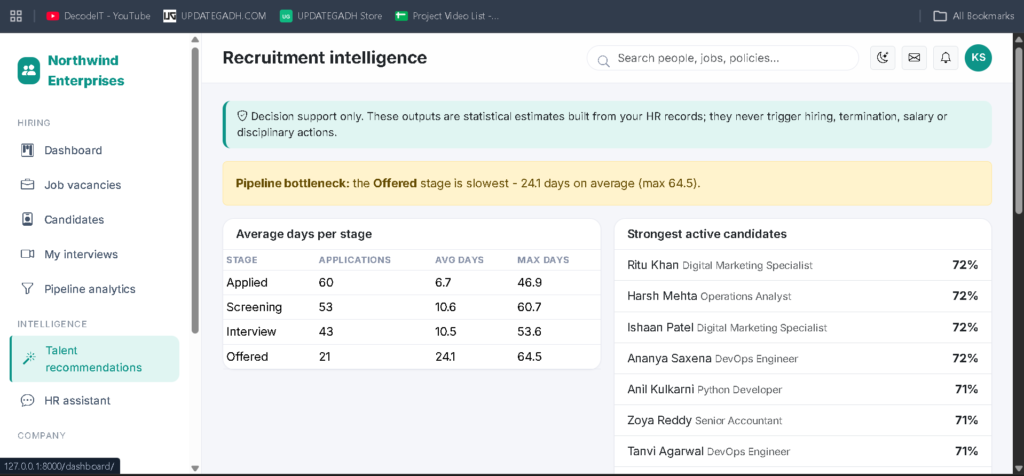
- Recruitment Pipeline Analytics: Monitor recruitment pipeline information.
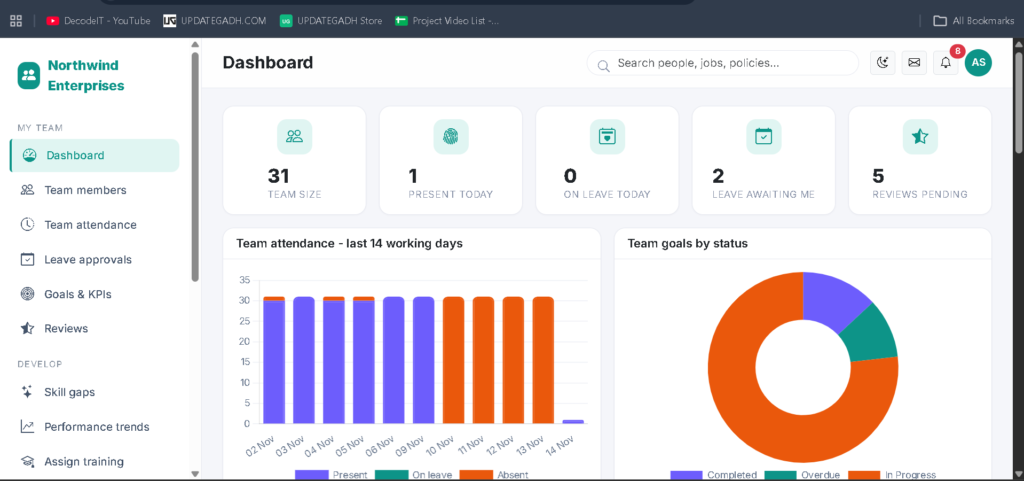
Department Manager Module:
- Team Attendance: Monitor team attendance records.
- Leave Approvals: Review and approve leave requests.
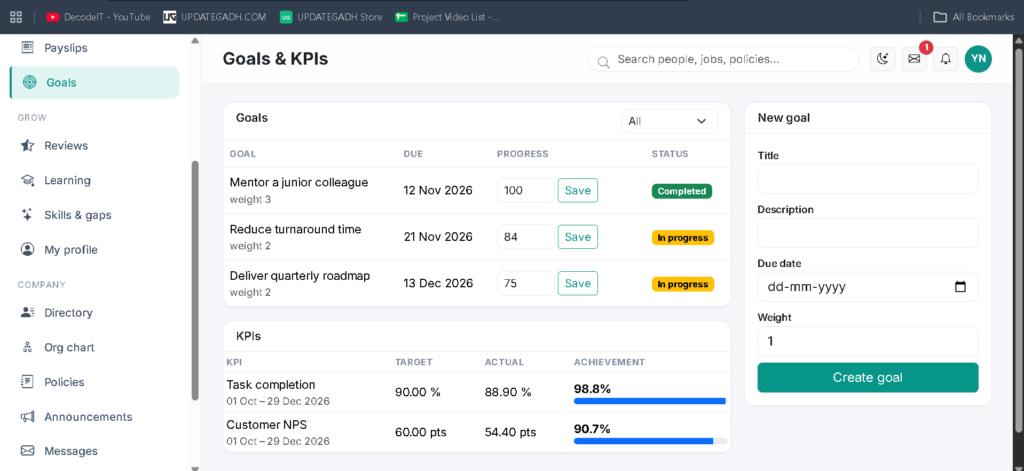
- Goals and KPIs: Manage team goals and performance indicators.
- Performance Reviews: Participate in employee reviews.
- Skill Gap Analysis: Identify skill gaps within the team.
Employee Module:
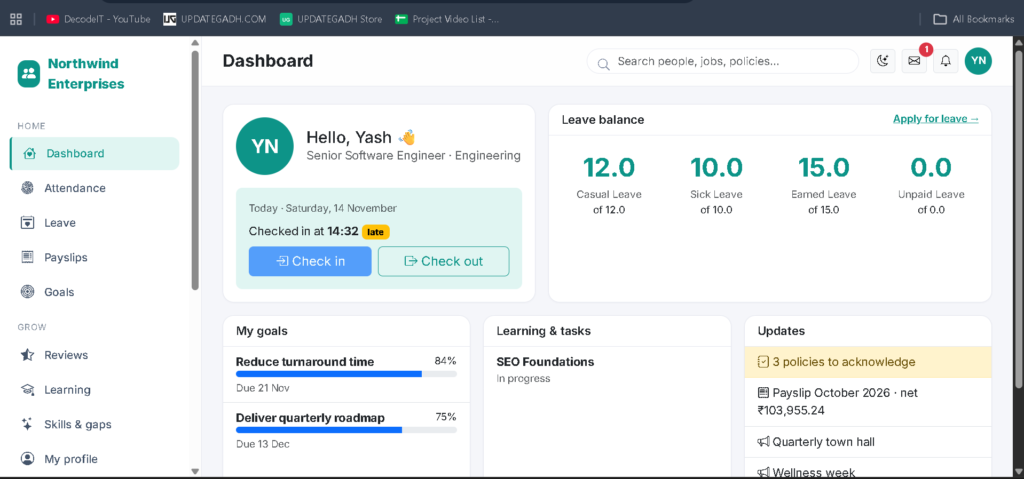
- Check-In and Check-Out: Record employee attendance.
- Leave Management: Submit and manage leave requests.
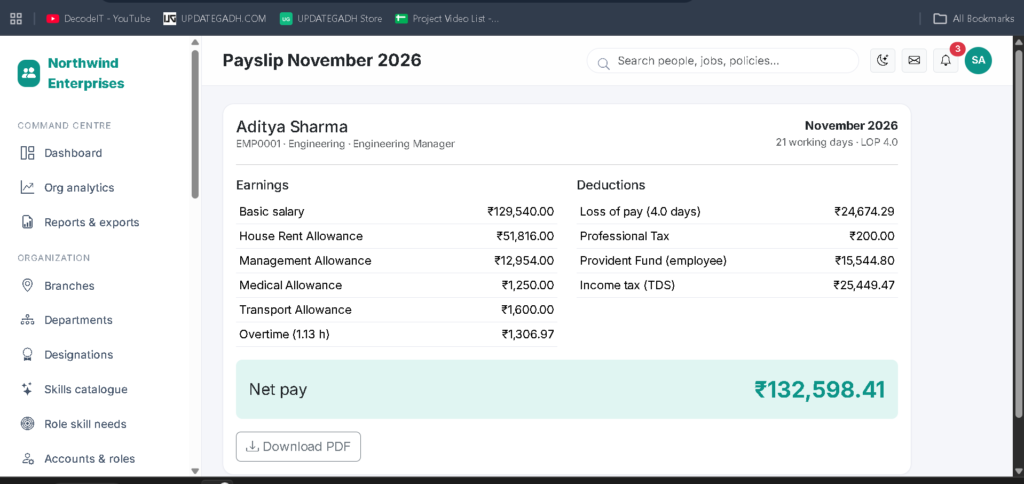
- Payslips: Access employee payslips.
- Goal Management: Manage personal goals.
- Learning Management: Access learning-related functionality.
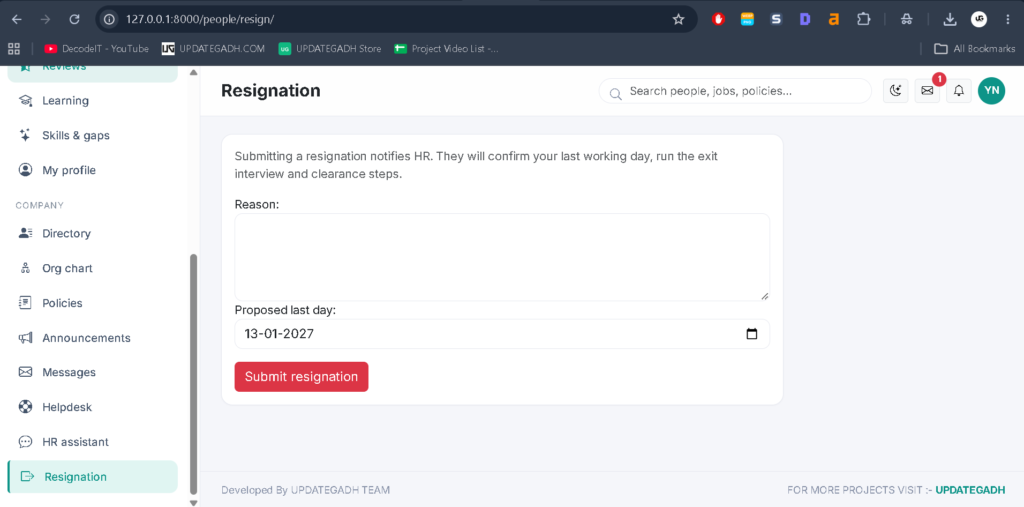
- Resignation: Submit resignation requests.
Advance Employee Management System Using PHP :- Click Here
How Does Employee Lifecycle Management Work?
The Employee Management System provides employee lifecycle functionality covering different stages of employment.
Its employee lifecycle module includes onboarding checklists, document management with validation, employee history, transfers, promotions, probation management, resignation, exit interviews, and clearance processes.
How Does Recruitment Management Work?
The Employee Management System includes recruitment intelligence tools that help recruiters manage vacancies and candidate information through different recruitment stages.
The recruitment module supports:
- PDF and DOCX resume parsing.
- Candidate skill extraction.
- Education and experience identification.
- Candidate ranking and comparison.
- Interview rounds and feedback.
- Offer-letter PDF generation.
- Hiring and employee onboarding.
The hiring process can convert a selected candidate into an employee record and begin the onboarding process.
What Are the Attendance and Leave Management Features?
The Employee Management System provides attendance and leave management functionality for employees, HR managers, and department managers.
Its attendance and leave module includes:
- Employee check-in and check-out.
- Shift management.
- Holiday management.
- Late arrival and early departure tracking.
- Overtime tracking.
- Two-level leave approval workflow.
- Leave balance management.
- Biometric attendance API endpoint.
The biometric integration can record employee attendance through an API when the required configuration is provided.
Employee Management System Using Python and Django :- Click Here
How Does Payroll Management Work?
The Employee Management System includes a payroll module for managing employee salary information and payroll processing.
Its payroll functionality includes:
- Configurable salary components.
- Tax slabs.
- Salary adjustments.
- Payroll runs.
- Payroll approval workflow.
- PDF payslip generation.
- Salary revision management.
How Does Performance and Learning Management Work?
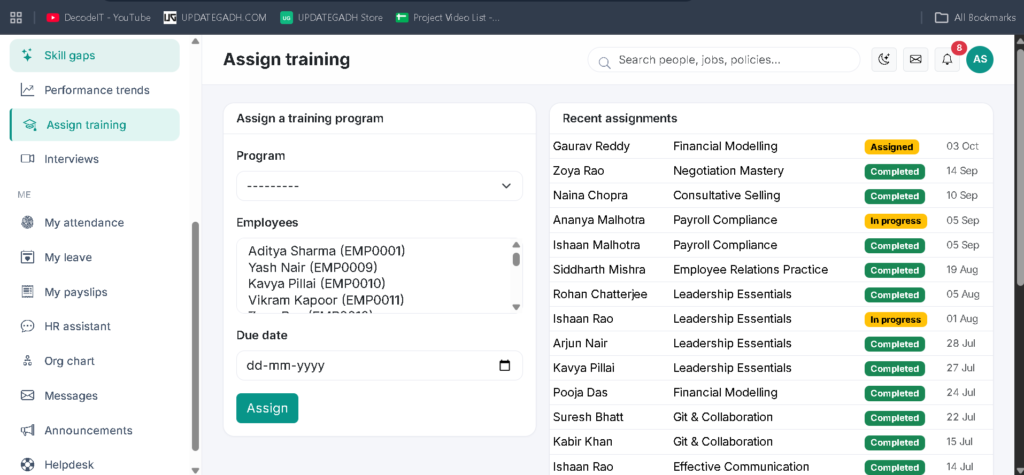
The Employee Management System provides tools for managing employee performance, goals, training, and skill development.
Available functionality includes:
- Employee goals and KPIs.
- Performance review cycles.
- Self reviews and manager reviews.
- Employee training.
- Training certificates.
- Skill updates.
- Skill gap identification.
The system can use identified skill gaps to support training recommendations.
What Communication Features Are Available?
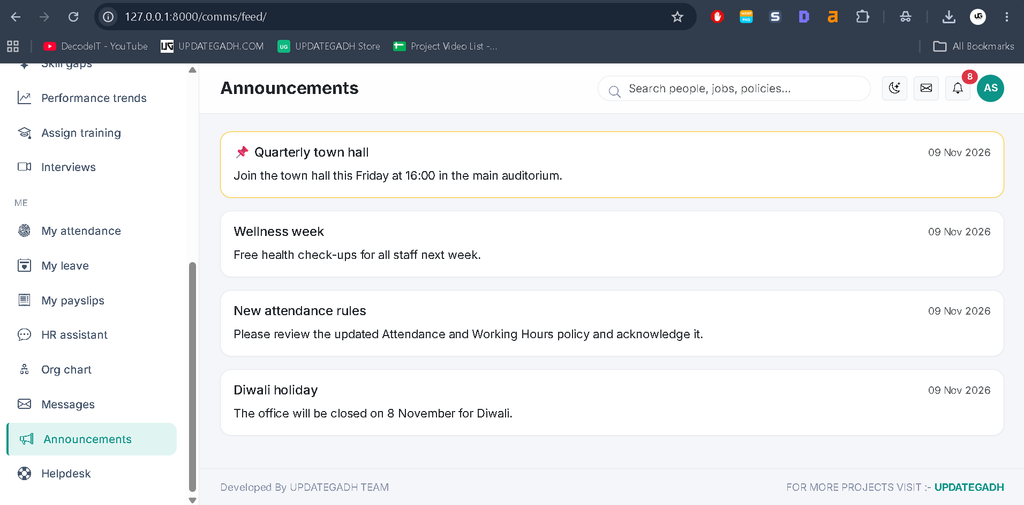
The Employee Management System includes communication tools that help employees and HR teams share information and manage workplace requests.
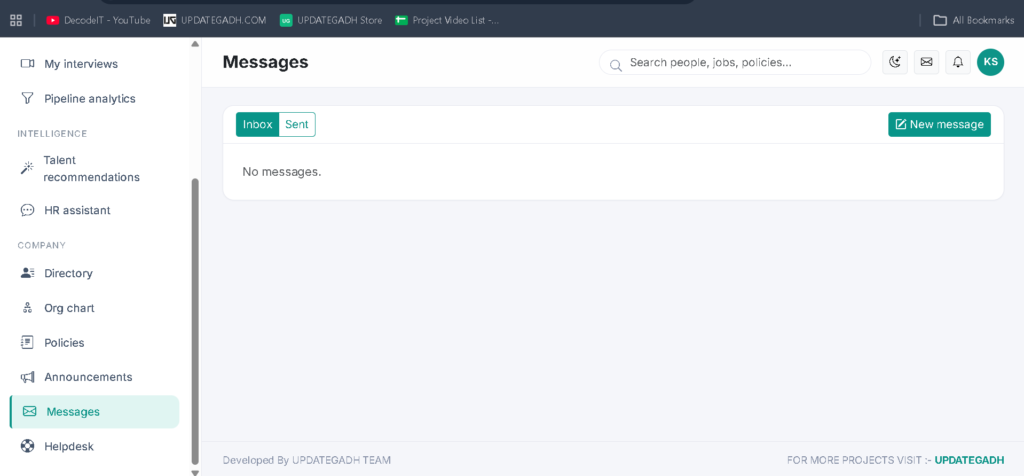
The communication module provides:
- Internal messages.
- Organization announcements.
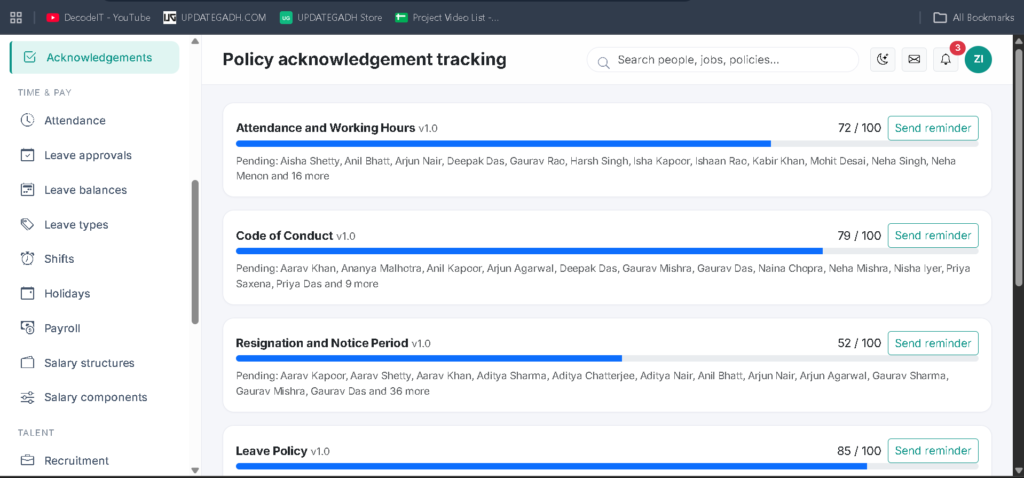
- Policy acknowledgements.
- Helpdesk functionality.
- Reminders.
Employee Management System Using MERN Stack :- CLick Here
How Does AI and Machine Learning Work in the Employee Management System?
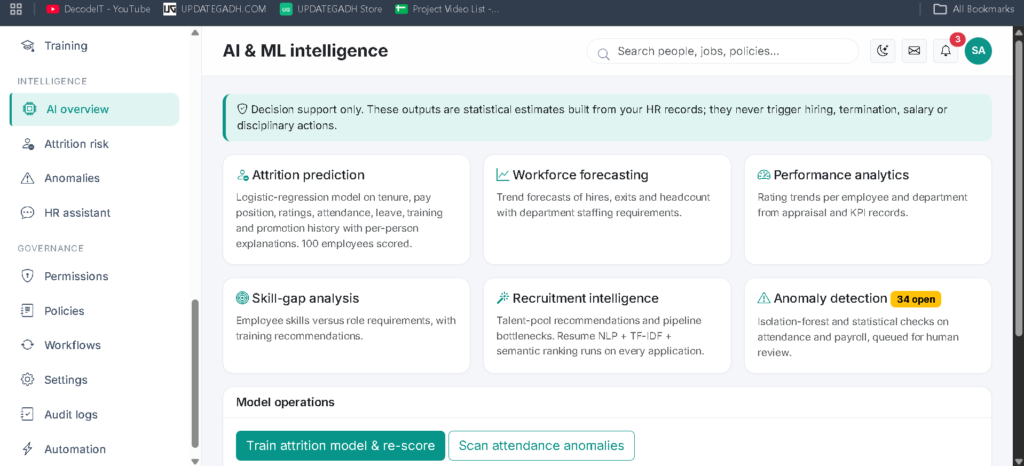
The Employee Management System includes AI and ML functionality inside the intelligence/ directory. These features use information from database records to support HR operations and decision-making.
Resume NLP:
The resume processing functionality in intelligence/nlp.py extracts text from resumes and identifies skills using the skills taxonomy and Skills catalogue. It also extracts education level, experience, and certifications.
Candidate Ranking:
The candidate ranking functionality in intelligence/matching.py compares candidate information using the following scoring distribution:
- 40% skill coverage.
- 20% TF-IDF cosine similarity.
- 20% semantic similarity.
- 10% experience.
- 10% education.
Semantic similarity uses LSA embeddings fitted on the resume corpus, with optional sentence-transformers support. Each candidate score includes an explanation.
Employee Attrition Prediction:
The Employee Management System uses Logistic Regression to analyze employee attrition based on tenure, pay position, ratings, lateness, overtime, leave, training, promotion gap, and goals.
Cross-validated AUC is displayed, and employee-specific factors are calculated using coefficient multiplied by feature value contributions.
This model requires at least 30 employees with at least 5 resignations.
Forecasting and Performance Trends:
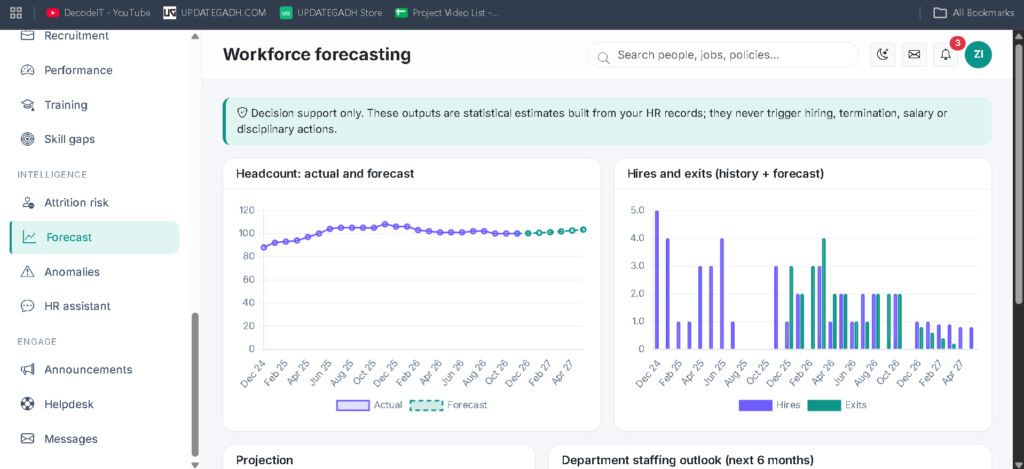
The system includes forecasting and performance trend functionality to support HR analytics.
Skill Gap Analysis:
The application identifies skill gaps and connects them with training functionality.
Anomaly Detection:
The Employee Management System uses IsolationForest and z-score rules to identify unusual patterns. Detected anomalies are placed in a human review queue.
HR Assistant:
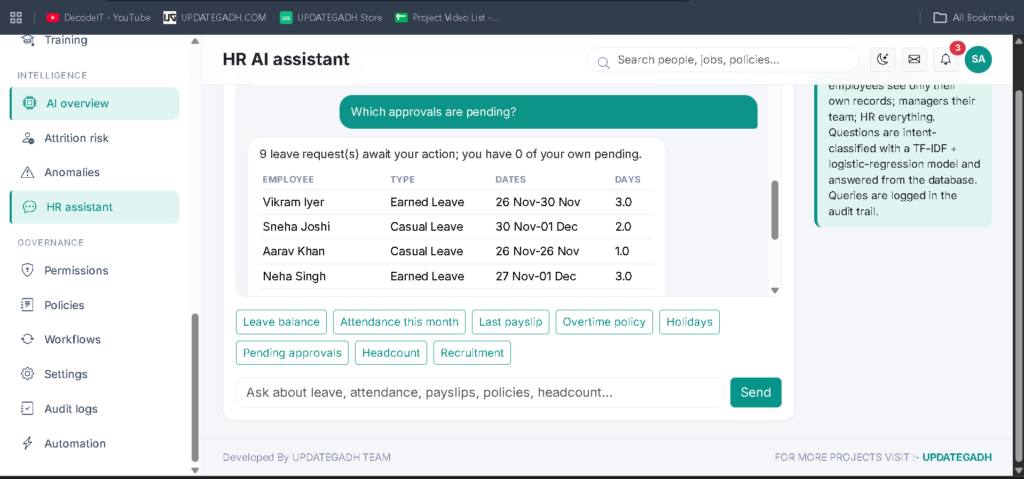
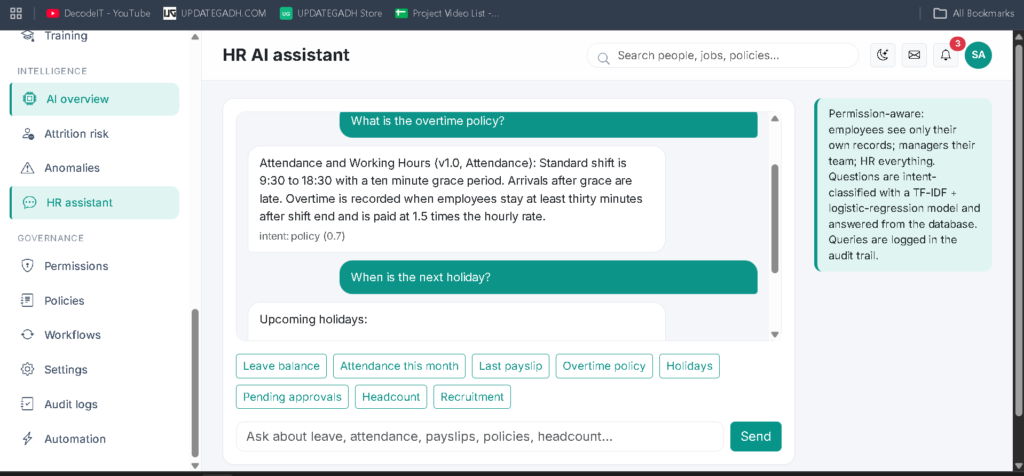
The HR assistant combines an intent model with permission-aware database lookups to provide relevant HR information.
AI predictions are designed as decision-support information. They do not automatically trigger hiring, termination, salary, or disciplinary actions.
How to Retrain AI Models?
The Employee Management System allows users to retrain machine learning models when required.
- You can retrain the models through: AI Overview > Train
- Or execute the following command in the VS Code terminal: python manage.py train_models
What Is the Project Overview?
Project Details:
Project Name: Employee Management System
Frontend: Bootstrap 5, Chart.js
Backend: Python Django 5
Database: SQLite
Machine Learning: Scikit-learn
NLP: TF-IDF and LSA Embeddings
Additional Libraries: ReportLab and OpenPyXL
User Roles: Admin, HR Manager, Recruiter, Department Manager, Employee
How to Download
The complete package is available so you can run, study, and submit it with confidence.
Screenshot

How to Install Employee Management System Using Python?
Installation Guide
Step 1: Install Python 3.11 or newer.
Step 2: Extract the project ZIP file and open the project folder in VS Code.
Step 3: Open the VS Code Terminal.
Step 4: Create a virtual environment: python -m venv venv
Step 5: Activate the virtual environment: .\venv\Scripts\Activate
Step 6: Install required packages: pip install -r requirements.txt
Step 7: Create database migrations: python manage.py makemigrations core people recruitment attendance payroll performance comms intelligence
Step 8: Apply database migrations: python manage.py migrate
Step 9: Generate demo data: python manage.py seed_demo
Step 10: Run the project: python manage.py runserver
Open your browser and visit: 127.0.0.1:8000/
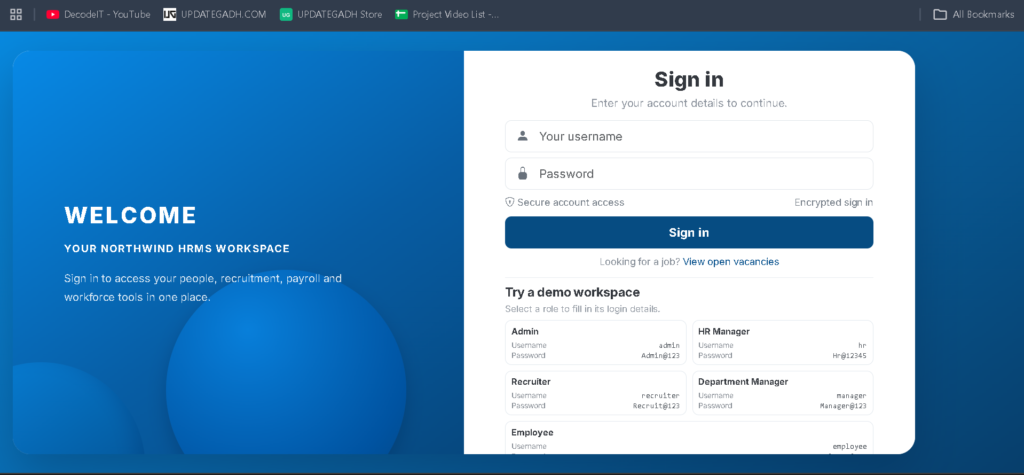
Demo Login Details
Admin
Username: admin
Password: Admin@123
HR Manager
Username: hr
Password: Hr@12345
Recruiter
Username: recruiter
Password: Recruit@123
Department Manager
Username: manager
Password: Manager@123
Employee
Username: employee
Password: Employee@123
Frequently Asked Questions
1. What is an Employee Management System?
An Employee Management System is a web-based application that helps organizations manage employee records, recruitment, attendance, payroll, leave, performance, and HR operations.
2. Which technologies are used in this Employee Management System?
The project uses Python, Django 5, SQLite, Bootstrap 5, Chart.js, Scikit-learn, ReportLab, and OpenPyXL.
3. How many user roles are available?
The Employee Management System provides five role workspaces: Admin, HR Manager, Recruiter, Department Manager, and Employee.
4. Does the Employee Management System include AI features?
Yes. It includes resume NLP, candidate ranking, attrition prediction, forecasting, performance trends, skill gap analysis, anomaly detection, and an HR assistant.
5. Can employees access their payslips and leave information?
Yes. Employees can use their workspace to check in and out, submit leave requests, access payslips, manage goals, use learning functionality, and submit resignation requests.
Final Thoughts
Employee Management System Using Python is a comprehensive project for understanding how modern HR operations can be managed through a centralized web application. It provides five separate role-based workspaces and covers recruitment, employee lifecycle management, attendance, leave, payroll, performance, learning, and communication.