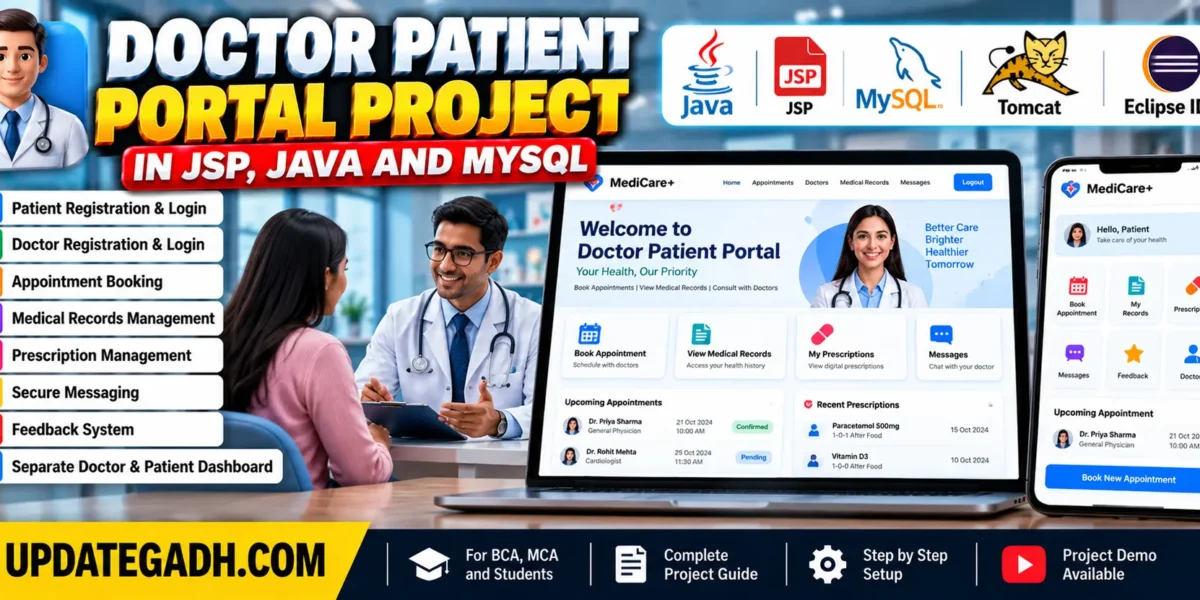
Doctor Patient Portal Project in JSP, Java and MySQL
The Doctor Patient Portal Project in JSP, Java and MySQL is a web-based healthcare application designed to improve communication between doctors and patients. It provides a centralized platform for managing patient information, doctor details, appointments, medical records, prescriptions, messages, and feedback.
This Advance Java project uses JSP for web pages, Java for application logic, JDBC for database connectivity, and MySQL for storing information. It is a useful project for BCA, MCA, and computer science students who want to understand how healthcare management applications can be developed using Java technologies.
Appointment Management System Using MERN Stack :- Click here
What Is a Doctor Patient Portal Project?
A Doctor Patient Portal is an online platform that allows doctors and patients to access relevant healthcare information through their respective accounts. Patients can register, book appointments, and view their medical records, while doctors can manage appointments and update patient information.
The project organizes essential healthcare activities in one place and demonstrates how Java web technologies can be used to develop a practical database-driven application.
Real Time Projects on YouTube:- DecodeIT
Doctor Patient Portal Project Overview
| Project Detail | Description |
|---|---|
| Project Name | Doctor Patient Portal Project |
| Programming Language | Java |
| Web Technology | JSP, HTML, CSS |
| Database | MySQL |
| Database Connectivity | JDBC |
| Web Server | Apache Tomcat |
| Project Type | Web-Based Healthcare Application |
What Are the Available Features of the Doctor Patient Portal?
The project description covers the following features for organizing doctor-patient interactions and healthcare information.
1. Patient Registration and Login
Patients can create an account and log in to access their portal. Their account can be associated with personal information and medical records.
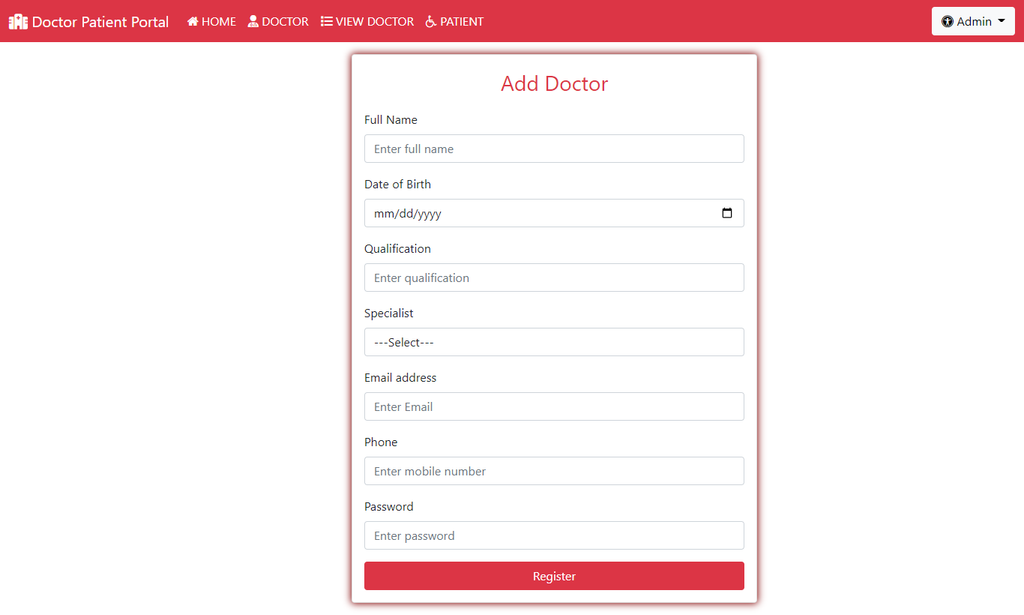
2. Doctor Registration and Login
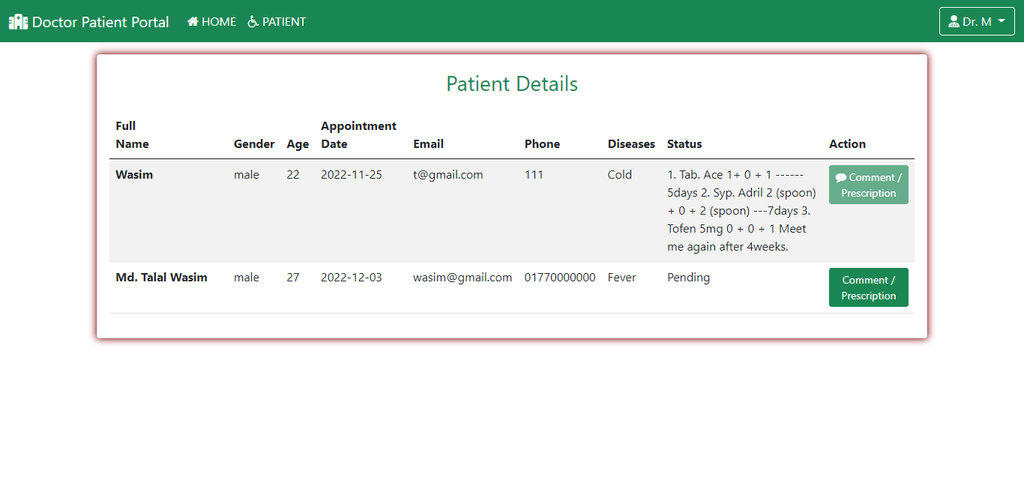
Doctors can register, log in, access their patient lists, and manage appointment-related information through the doctor interface.
3. Appointment Booking and Management
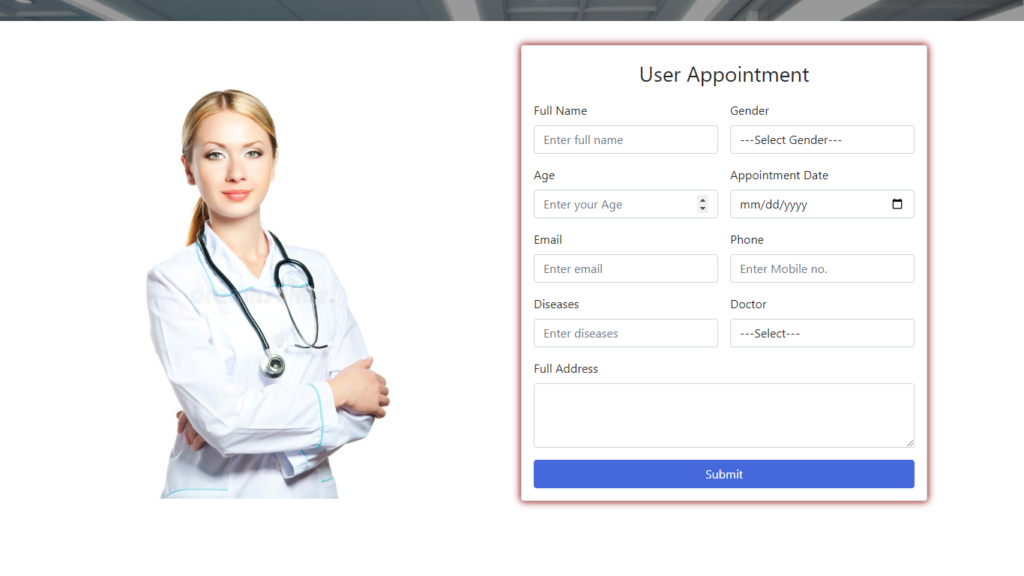
Patients can select a doctor, choose an appointment date and time, and submit an appointment request. Doctors can view and manage appointment details.
4. Medical Records and History
Doctors can add or update patient medical information, including diagnoses and reports. Patients can view the medical records available to them through the portal.
5. Prescription Management
Doctors can issue digital prescriptions, and patients can view the prescriptions associated with their medical records.
6. Messaging and Feedback
The proposed messaging functionality allows doctors and patients to exchange messages. A feedback feature can also support communication between users.
Appointment Management System Using PHP :- Click here
Which Technologies Are Used in This Project?
- Java: Implements application logic and server-side processing.
- JavaServer Pages (JSP): Creates dynamic web pages.
- MySQL: Stores user information, appointments, medical records, and messages.
- JDBC: Connects Java application code to the MySQL database.
- Apache Tomcat: Runs the JSP-based web application.
- HTML and CSS: Build and style the user interface.
What Are the Database Tables Required for the Project?
The proposed database is named doctor_patient_portal. The following tables describe the main information areas identified for the application.
| Table Name | Purpose | Example Columns |
|---|---|---|
| Users | Stores account and role information | user_id, username, password, role |
| Appointments | Stores appointment schedules | appointment_id, patient_id, doctor_id, date, time, status |
| Medical_Records | Stores medical history and diagnosis details | record_id, patient_id, doctor_id, diagnosis, prescription, date |
| Messages | Stores doctor-patient messages | message_id, sender_id, receiver_id, message_content, date_sent |
These tables represent a proposed database structure based on the project description. Their exact schema and relationships should be confirmed against the actual source code before implementation.
How to Set Up the Development Environment
Prepare the required Java development tools before creating or running the project.
- Install the JDK: Install a compatible Java Development Kit and configure the Java environment.
- Install Apache Tomcat: Set up Tomcat to run the JSP application.
- Install MySQL: Prepare the database server for storing application information.
- Configure a Java IDE: Use an IDE that supports Java web development and Tomcat integration.
- Prepare the database: Create the
doctor_patient_portaldatabase and configure the required tables.
How to Download
The complete package is available so you can run, study, and submit it with confidence.
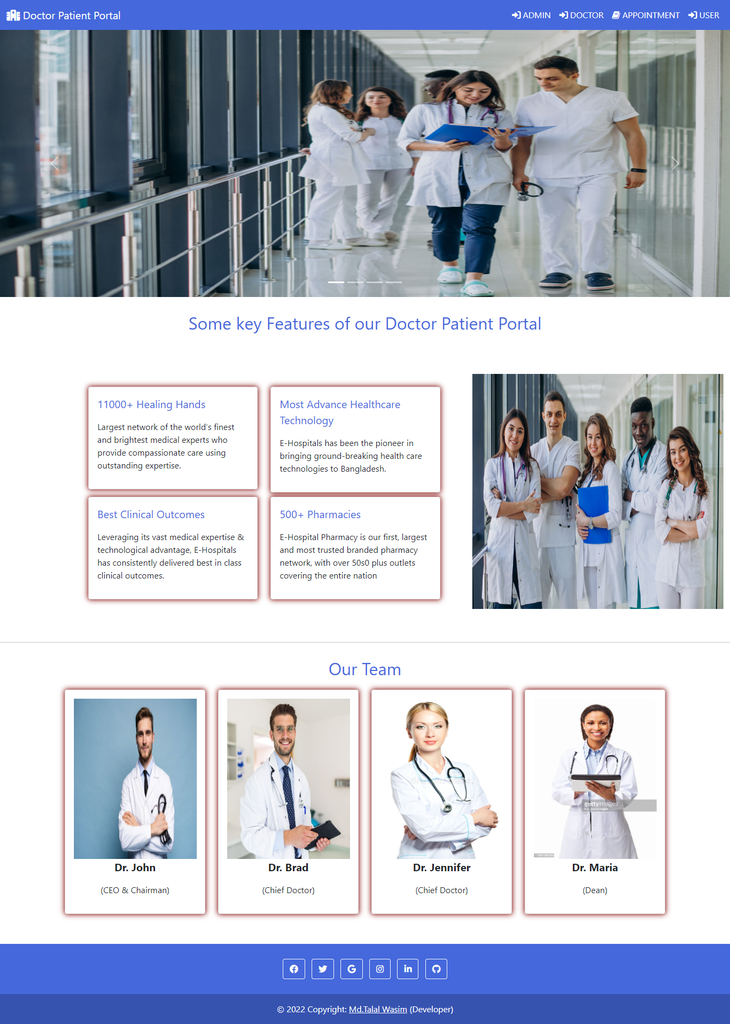
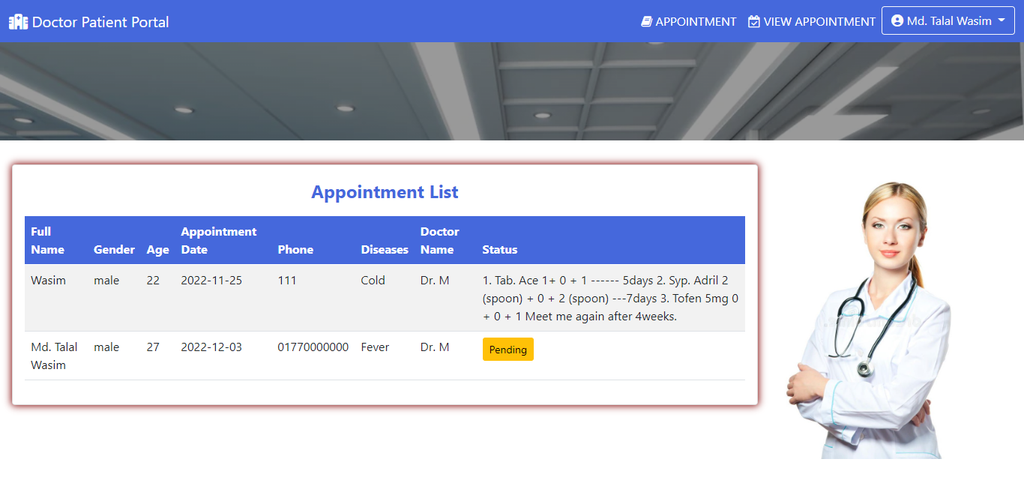
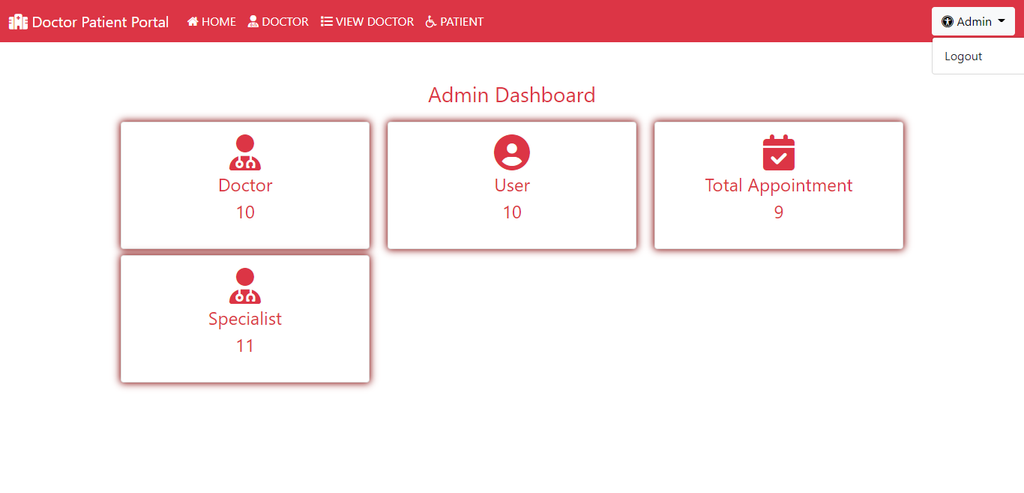
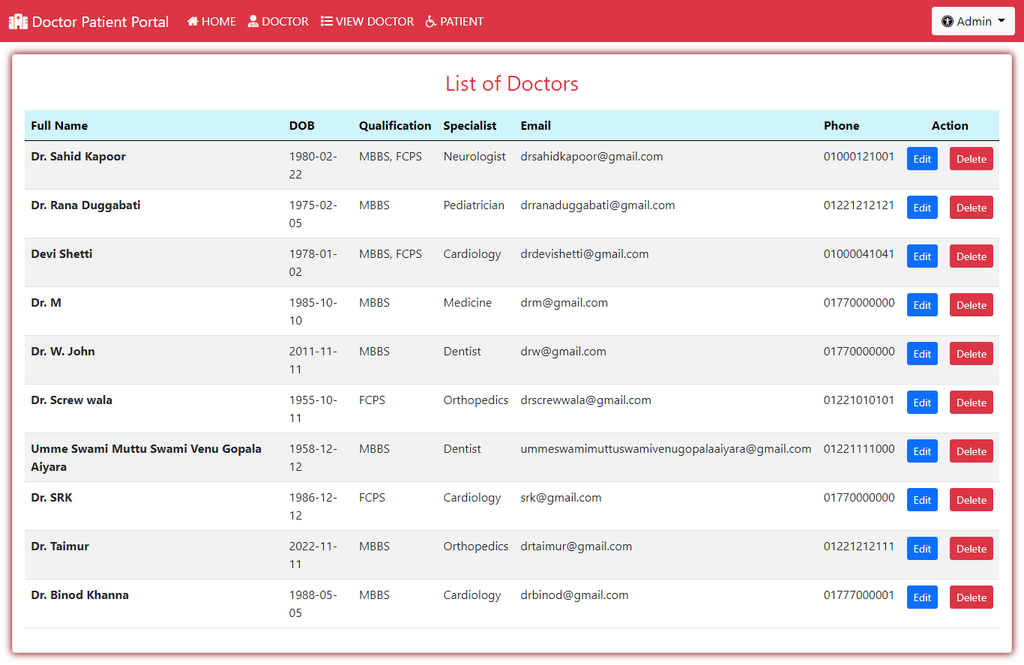
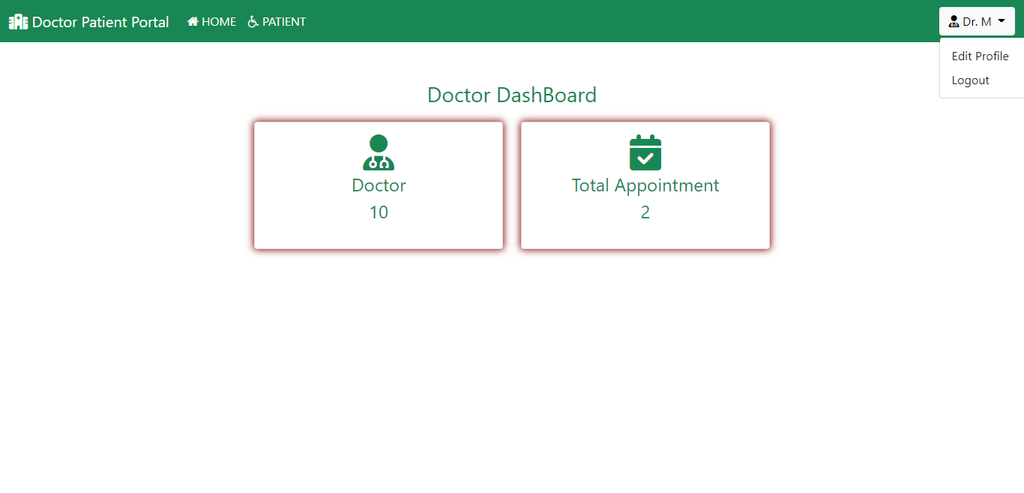
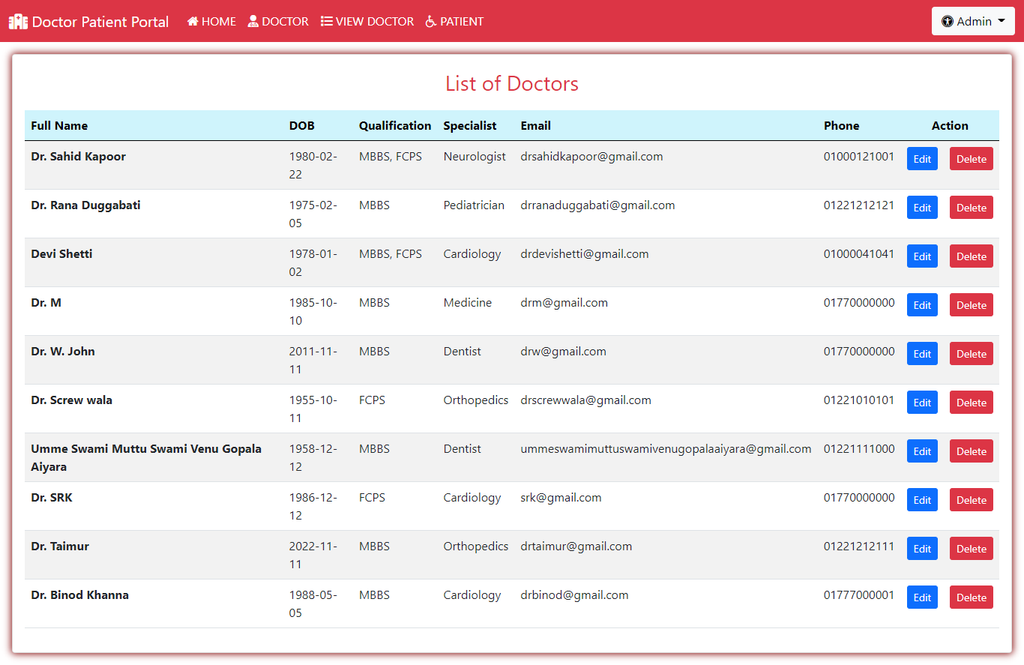
Screenshot
How to Implement the JSP Pages and Java Logic
tudents exploring healthcare and appointment-based applications can also review these related projects on UPDATEGADH.
Doctor Appointment Management System Using Python :- Click here
The proposed application separates its main functions into JSP pages and Java-side request handling.
1. Registration and Login Pages
Create register.jsp and login.jsp for account registration and login forms. Java backend logic should validate submitted data and handle database operations securely.
2. Doctor and Patient Dashboards
Use separate dashboard pages, such as doctor_dashboard.jsp and patient_dashboard.jsp, to display information relevant to each user role.
3. Appointment Booking
Create book_appointment.jsp to collect the selected doctor, appointment date, and time. Java request-handling logic should validate the request and save the appointment details.
4. Medical Records and Prescriptions
Pages such as view_records.jsp and manage_records.jsp can support viewing and updating medical records according to the user’s role.
5. Messaging and Feedback
Create messages.jsp for the proposed messaging interface. The backend should verify user permissions before saving or displaying messages.
How to Connect Java with MySQL Using JDBC
JDBC allows Java code to communicate with the MySQL database. A database utility class such as DBConnection.java can manage database connections using the configured database URL, username, and password.
Java servlets can process requests for login, registration, appointment booking, and record updates. Use prepared statements, appropriate session handling, and server-side validation to help protect sensitive healthcare information.
How to Run and Test the Doctor Patient Portal
- Configure the JDK, Apache Tomcat, and MySQL.
- Create the database and prepare the required tables.
- Configure the database connection settings in the Java project.
- Deploy the JSP application to Apache Tomcat.
- Open the application using the local URL and port configured for your Tomcat server.
- Test registration, login, appointment handling, medical records, prescriptions, and messaging according to the implemented functionality.
Clinic Management System :- Click here
Explore this related clinic management project to learn more about organizing healthcare-related workflows through software.
What Should Students Consider When Developing This Project?
- Input validation: Validate all user-submitted data on the server.
- Database security: Use prepared statements and avoid storing passwords in plain text.
- Access control: Ensure patients and doctors can access only the information permitted for their roles.
- Session management: Handle login sessions securely.
- Error handling: Provide useful error messages without exposing database credentials or sensitive information.
- Privacy: Treat medical records and patient information as sensitive data.
Frequently Asked Questions (FAQs)
1. What is a Doctor Patient Portal Project in JSP?
It is a web-based healthcare application concept that uses JSP and Java to support communication between doctors and patients, including appointment management and medical record access.
2. Which programming language is used in this project?
Java is used for application logic, while JSP supports dynamic web pages. HTML and CSS are used for the frontend.
3. Which database is used in the Doctor Patient Portal?
MySQL is the proposed database for storing account details, appointments, medical records, and messages.
4. Why is JDBC used in this project?
JDBC provides connectivity between Java application code and the MySQL database, allowing the application to perform database operations.
5. Which server is required to run the project?
Apache Tomcat is the web server specified in the project description for deploying the JSP application.
6. Can students use this project for academic learning?
Yes. It can help students study Java web development, database connectivity, user roles, appointment workflows, and healthcare application design.
7. Does the project include messaging and prescription management?
These features are included in the supplied project description. Their availability in a working implementation should be verified against the actual source code.
The Doctor Patient Portal Project in JSP, Java and MySQL is a practical academic project idea for learning Java web development and database-driven application design. Its proposed features cover patient and doctor accounts, appointment scheduling, medical records, prescriptions, and messaging.