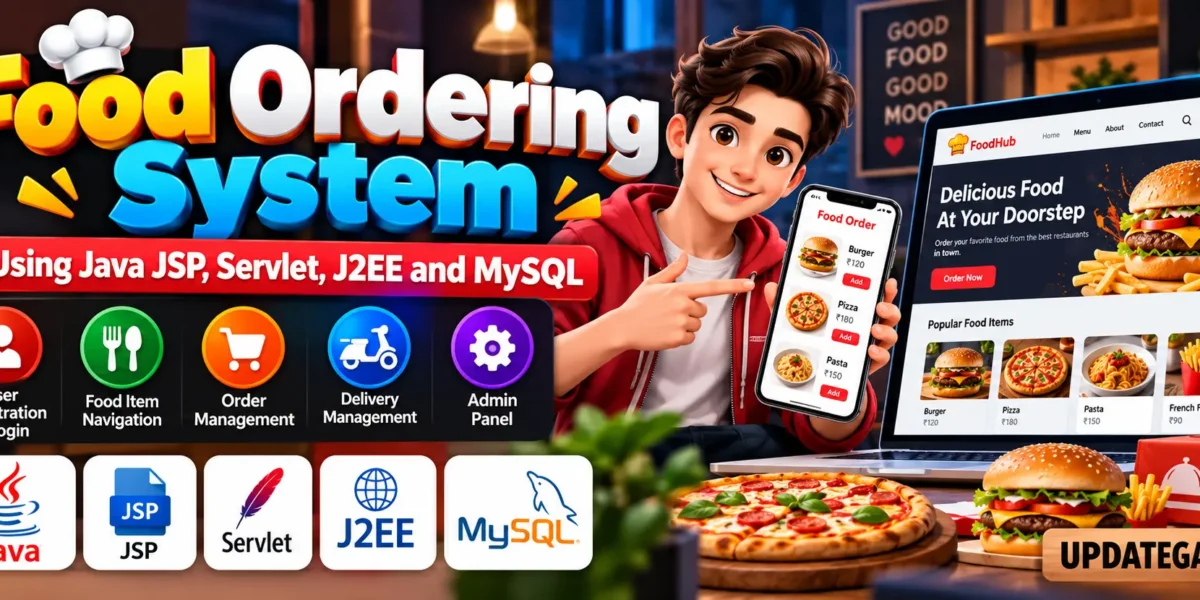
Food Ordering System Using Java JSP, Servlet, J2EE and MySQL
Introduction
In today’s digital world, people prefer convenient and faster ways to order food. An online food ordering system allows customers to browse food items and access ordering functionality through a web application. It also helps manage user information, food products, orders, and delivery records.
The Food Ordering System using Java JSP, Servlet, J2EE and MySQL is a web-based project designed to demonstrate Java web development and database management. JSP (JavaServer Pages) creates dynamic web pages, Servlets process application requests, J2EE provides the Java enterprise development environment, and MySQL stores and manages application data.
Complete Advance AI Topics: Click Here
Real Time Projects on YouTube:- DecodeIT
Project Overview
The Food Ordering System provides customer-side and administrator-side functionality. Customers can create accounts, log in, manage profiles, browse food items, and view their ordered food list. Administrators can manage users, deliveries, orders, and product items.
| Project Detail | Description |
|---|---|
| Project Name | Food Ordering System |
| Programming Language | Java |
| Technologies Used | JSP, Servlet, J2EE |
| Database | MySQL |
| Server | Apache Tomcat |
| Architecture | Model-View-Controller (MVC) |
| Project Type | Web-Based Application |
What Is a Food Ordering System?
A Food Ordering System is a web-based application that allows customers to browse food items and access food ordering functionality online. It provides an interface for customers and management features for administrators.
This project demonstrates how Java web technologies and a MySQL database can work together to build a database-driven application. Students can explore its structure and understand how different application components communicate.
Online Food Ordering and Restaurant Management System :-Click Here
How to Make the Food Ordering System?
To develop the Food Ordering System, create a Java web application using an Integrated Development Environment (IDE), such as Eclipse or IntelliJ IDEA. Organize the application using MVC architecture, develop the required JSP pages and Servlets, and configure the MySQL database connection.
The MVC architecture separates the application into three components:
- Model: Handles data operations and database interactions.
- View: Displays the user interface through JSP pages.
- Controller: Processes application requests and coordinates communication between the model and view.
After implementing these components, configure Apache Tomcat, connect the database, and test the application’s functionality. This structure helps keep the application organized and easier to maintain.
Online Food Ordering System in Python :- Click Here
What Are the Essential Features of This Project?
The Food Ordering System includes customer and administrator features for managing food items, user accounts, orders, and delivery records.
What Features Are Available for Customers?
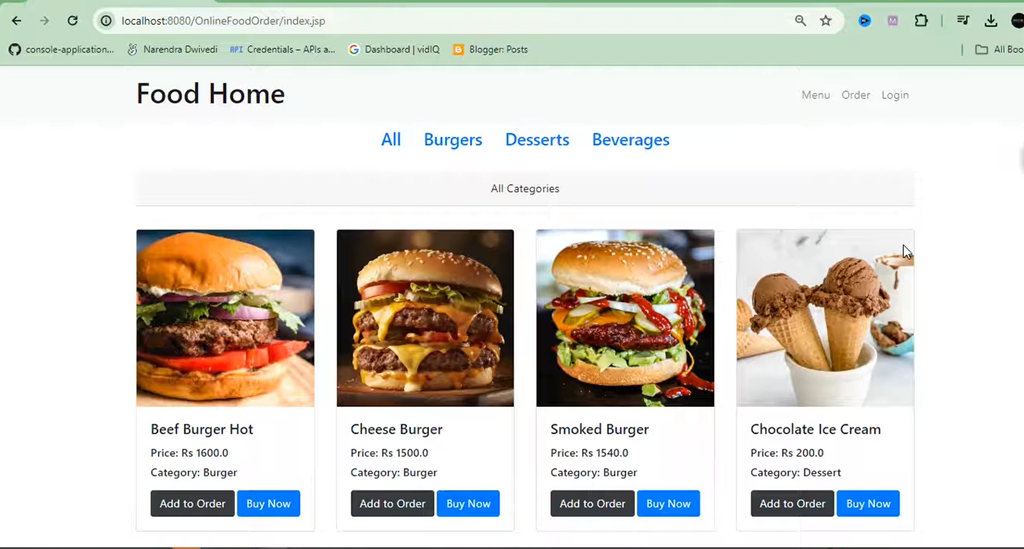
- Food Item Navigation and Selection: Browse and select available food items.
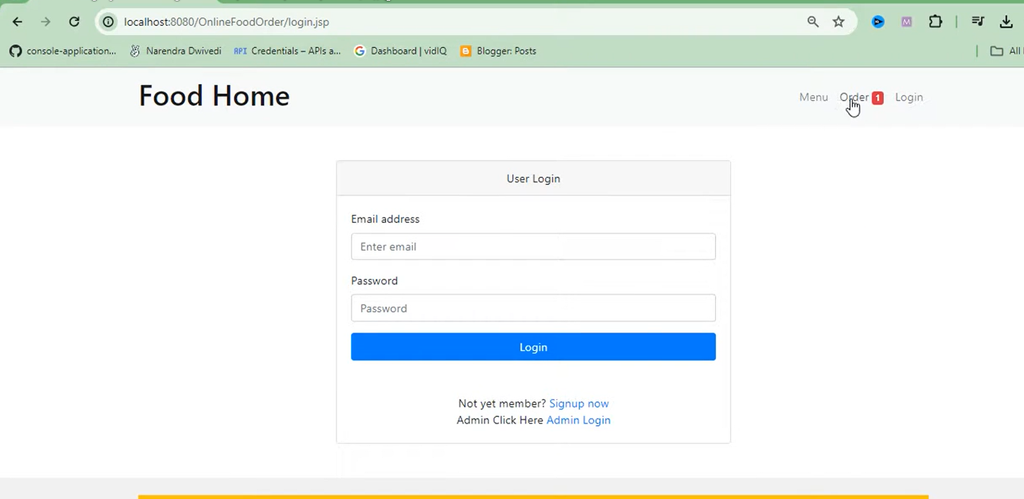
- Account Creation and Login: Register an account and log in to the application.
- Profile Management: Create, view, update, and manage profile information through CRUD operations.
- Food Collection Page: Explore the food collection displayed by the application.
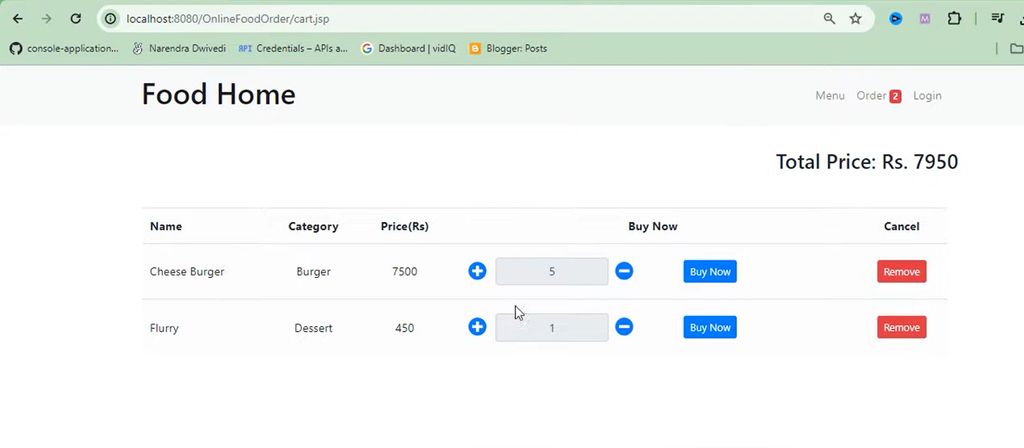
- Ordered Food List Page: View the list of ordered food items.
- Dynamic Header and Footer: Maintain a consistent layout across application pages.
What Can Administrators Manage?
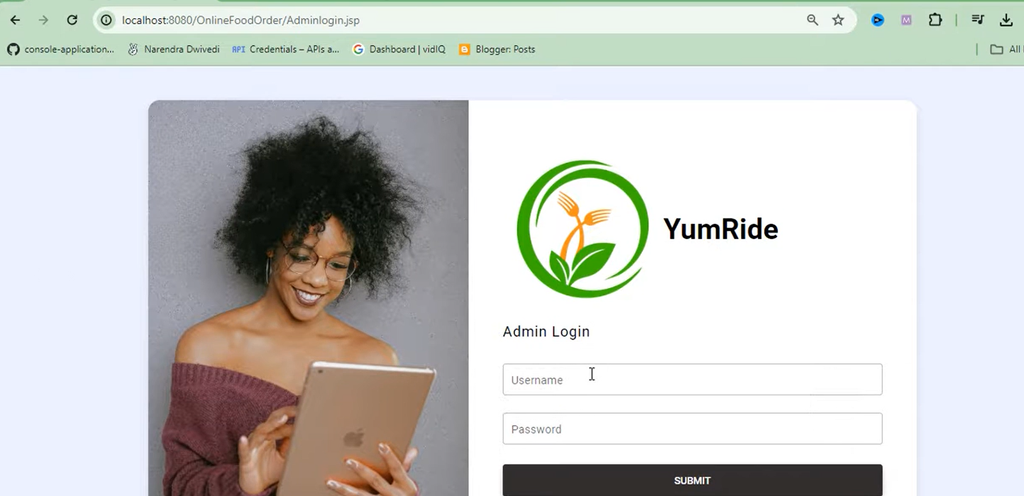
- Admin Login Page: Access the administrator section.
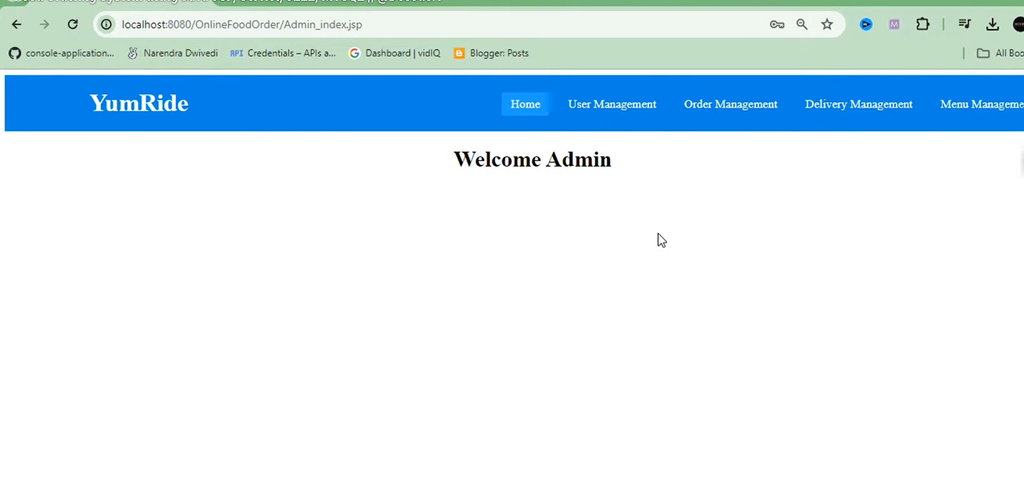
- User Management: Create, view, update, and manage user records.
- Delivery Management: Manage delivery records through CRUD operations.
- Order Management: Create, view, update, and manage order records.
- Product Item Management: Manage food product records and related information.
These features provide separate functionality for customers and administrators. The exact behavior of each feature depends on its implementation in the supplied project.
Food Ordering System Using PHP and MySQL :- Click Here
Which Software and Tools Are Required?
The project requires Java development tools, a web server, and a database management system to develop and run the application.
- Java Development Kit (JDK): Provides the tools required to compile and run Java applications.
- Eclipse IDE or IntelliJ IDEA: Used to write, organize, and debug project code.
- Apache Tomcat Server: Runs the JSP and Servlet-based web application.
- MySQL Database Server: Stores and manages application data.
- MySQL Workbench: Helps create databases, manage tables, and execute SQL queries.
- JSP and Servlet Dependencies: Provide the APIs required for web application development.
- J2EE Development Components: Support Java web application development according to the project’s requirements.
Ensure that the Java environment, server configuration, database connection, and dependencies are compatible with the project files.
How to Download
The complete package is available so you can run, study, and submit it with confidence. It includes:
- Full Source Code
- Project Report
- Synopsis
- PPT Presentation
Demo Video
Screenshot
Home Page
Order
User Login Page
Admin Login Page
Admin Panal
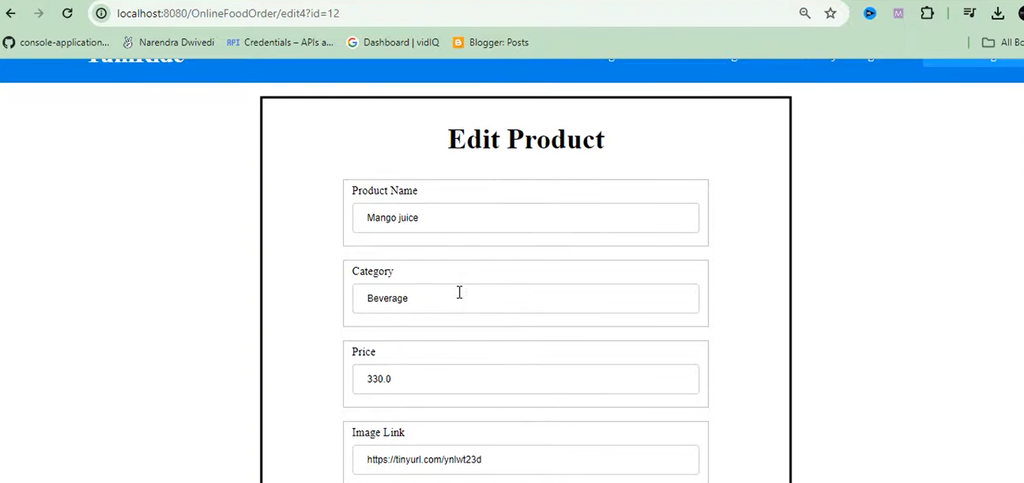
How to Run the Food Ordering System?
To run the Food Ordering System, configure the Java development environment, prepare the MySQL database, and deploy the web application on Apache Tomcat. Follow the installation instructions supplied with the project.
The general setup process includes:
- Install and configure the JDK and a compatible IDE.
- Install Apache Tomcat and configure it with the IDE.
- Set up the MySQL database using the project’s database files and instructions.
- Configure the application’s database connection.
- Deploy the application on Tomcat and test the available features.
The exact commands and configuration details depend on the supplied source code and project structure.
Why Is This Project Useful for Students?
The Food Ordering System is useful for students who want to practise Java web development, database connectivity, CRUD operations, and MVC architecture. It provides an academic project structure for understanding how customer interfaces and administrator management functions work together.
By studying this project, students can improve their understanding of JSP, Servlets, MySQL, and Apache Tomcat. It also helps them learn how application requests are processed and how database records are managed in a web-based system.
Frequently Asked Questions (FAQs)
1. Which programming language is used in the Food Ordering System?
Java is used with JSP and Servlets to develop the web application.
2. Which database is used in this project?
MySQL is used to store and manage the application’s data.
3. Which server is required to run the project?
Apache Tomcat is used to run the JSP and Servlet-based application.
4. Does the Food Ordering System include an administrator panel?
Yes, the described administrator features include user, delivery, order, and product item management.
5. What is the purpose of MVC architecture in this project?
MVC separates the model, view, and controller responsibilities, helping organize application code and simplify maintenance.
6. Is this project suitable for BCA and MCA students?
Yes, the project is suitable for students learning Java web development, MySQL, CRUD operations, and database-driven applications.
Conclusion
The Food Ordering System using Java JSP, Servlet, J2EE and MySQL is a useful academic project for students interested in Java web development. It demonstrates customer account management, food browsing, profile operations, and administrator functionality for managing users, deliveries, orders, and products.
Tags and SEO
Food Ordering System, Food Ordering System Using Java JSP Servlet J2EE MySQL, Online Food Ordering System, Online Food Ordering System for Restaurants, Food Ordering System Project in Java, Java JSP Project, Servlet Project, J2EE Project, MySQL Database Project, Online Restaurant Food Ordering System,