How to Find Jobs for Freshers
Finding your first job can feel difficult when you are a fresher and have limited professional experience. However, a planned approach can make the job search more organized and productive. Instead of applying randomly, freshers can identify suitable career options, improve their resumes, use job platforms, build professional connections, and prepare properly for interviews.
This step-by-step guide explains ten practical approaches that freshers can follow while searching for their first professional opportunity.
Table of Contents
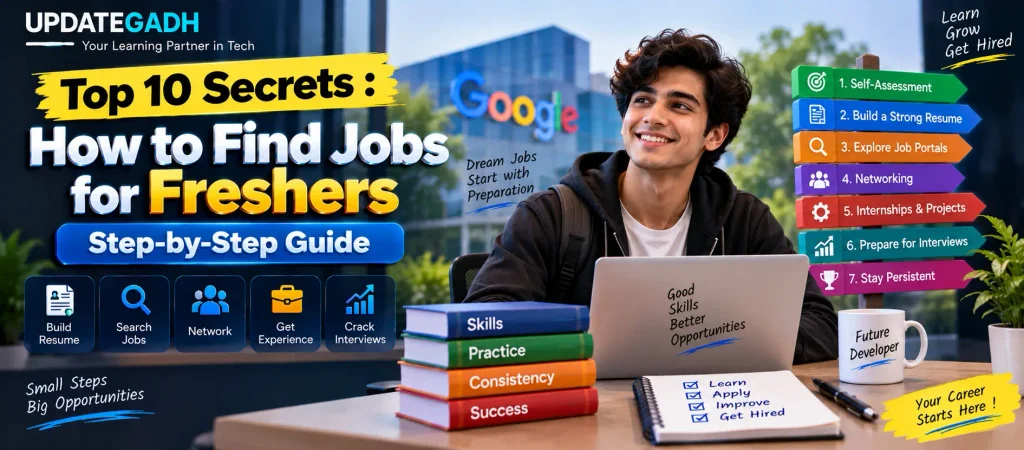
How to Find Jobs for Freshers
Step 1: Understand Your Skills and Career Goals
Before applying for jobs, spend some time understanding your own abilities, interests, and career direction. Knowing what you can offer and where you want to improve makes it easier to identify suitable positions.
Consider questions such as:
- Which technical and personal skills do I currently have?
- What are my strongest areas?
- Which skills require further improvement?
- Which industries or job roles interest me?
- What are my short-term and long-term career goals?
- Which experiences have influenced my career interests?
A clear self-assessment can help you select realistic job opportunities and create a more focused career plan.
Step 2: Create a Strong Resume
Your resume gives an employer a quick overview of your background. As a fresher, you may not have extensive work experience, so give proper attention to your education, technical skills, internships, certifications, academic projects, and relevant achievements.
- Use a simple professional format: Keep the structure clean and easy to read.
- Customize the resume: Adjust your resume according to the requirements of each position.
- Add a short summary: Clearly communicate your career objective and important qualifications.
- Show achievements: Mention meaningful results instead of only describing responsibilities.
- Highlight relevant skills: Put the skills related to the job in a visible position.
- Include education and certifications: Mention your degree, relevant coursework, certifications, and academic achievements.
- Present experience clearly: Include internships, training, projects, or other relevant professional exposure.
- Proofread carefully: Check spelling, grammar, formatting, and contact information before submitting.
Step 3: Use Online Job Portals
Online employment platforms are an important source of opportunities for freshers. Search using specific job titles, technologies, industries, and locations that match your career goals.
Some commonly used platforms include:
- LinkedIn: Professional networking and job-search platform.
- Indeed: Job search platform containing listings from different sources.
- Glassdoor: Provides job listings along with company-related information.
- Monster: Employment platform offering job listings and career resources.
- CareerBuilder: Connects job seekers with employers.
- ZipRecruiter: Provides job-posting and recruitment services.
Create complete profiles where appropriate, upload an updated resume, and enable job alerts so that you can monitor relevant openings.
Step 4: Check Company Career Pages
Do not depend only on job-search websites. Companies often publish vacancies directly on their career pages. Make a list of organizations where you would like to work and regularly check their available positions.
Examples of companies to research include Amazon, Microsoft, Apple, Alphabet, Facebook, Alibaba Group, Tencent, Samsung, Intel, and IBM.
Reading the official job description before applying can help you understand the required qualifications, technologies, responsibilities, and experience level.
Step 5: Build a Professional Network
Networking can introduce you to people who work in your preferred industry. Attend career fairs, technical events, college alumni meetings, workshops, and professional gatherings whenever possible.
Platforms such as LinkedIn can also help you connect with professionals, recruiters, alumni, mentors, and people working in roles that interest you. A professional network may provide useful career information, referrals, and guidance about available opportunities.
Step 6: Gain Experience Through Internships and Volunteering
Freshers can strengthen their profiles by gaining practical experience through internships, volunteer positions, academic projects, or other relevant activities.
Internship opportunities can be explored through platforms such as Internships.com, Indeed, Glassdoor, LinkedIn, and Chegg Internships.
Practical experience can help you understand workplace responsibilities while also giving you useful material to discuss during interviews.
Step 7: Prepare for Interviews
Once you begin receiving interview invitations, preparation becomes essential. Research the organization before the interview and learn about its products, services, mission, work, and recent developments.
Practice common interview questions and prepare concise answers based on your education, projects, internships, skills, and achievements. For technical roles, revise the concepts and technologies mentioned in the job description.
Professional presentation also matters. Dress appropriately for the interview, maintain good grooming, and make sure you are ready before the scheduled time. For virtual interviews, test your internet connection, microphone, camera, and required software beforehand.
Step 8: Maintain a Professional Online Presence
Recruiters may review a candidate’s online presence, so make sure your public profiles represent you professionally.
Review your social media accounts and remove content that could create an unprofessional impression. Your LinkedIn profile should contain current information about your education, skills, projects, certifications, and experience.
A consistent professional profile can make it easier for recruiters and employers to understand your background.
Step 9: Stay Patient and Persistent
Finding a first job can take time. Receiving a rejection does not mean that your career journey has ended. Use unsuccessful applications and interviews as opportunities to identify areas that need improvement.
Continue applying for relevant positions while developing your technical and communication skills. Update your resume when you gain new skills, complete projects, or earn certifications.
Step 10: Follow Up After Interviews
After completing an interview, consider sending a short thank-you message. Express appreciation for the interviewer’s time and the opportunity to discuss the position.
A professional follow-up demonstrates that you value the opportunity and remain interested in the role. Keep the message brief, polite, and relevant to the conversation you had during the interview.
Final Thoughts
Finding a job as a fresher requires preparation, consistency, and a clear understanding of your career direction. Start by assessing your skills, create a targeted resume, explore multiple job-search channels, build professional connections, and gain practical experience wherever possible.
Complete Advance AI Topics: Click Here
SQL Tutorial: Click Here
YT:- DecodeIT
Interview preparation and a professional online presence can further strengthen your job search. Most importantly, remain patient and continue improving after every application and interview. A structured approach can help you make your fresher job search more focused and manageable.
Keywords
Top 10 Secrets : How to Find Jobs for Freshers Step-by-Step Guide how to find jobs for freshers jobs for freshers fresher jobs how to get a job as a fresher fresher job search tips freshers job search how to find a job after graduation fresher resume tips resume for freshers online jobs for freshers best job portals for freshers fresher interview preparation job search tips for freshers career tips for freshers fresher career guide internship opportunities for freshers networking for freshers How to Find Jobs for Freshers ,How to Find Jobs for Freshers ,how to prepare for interviews entry level jobs graduate jobs job search strategy for freshers professional resume for freshers fresher career opportunities how to get your first job How to Find Jobs for Freshers ,How to Find Jobs for Freshers ,How to Find Jobs for Freshers