Criminal Record Portal Using Spring Boot
The Criminal Record Portal is a web-based application designed to simplify the management, storage, and retrieval of criminal records. This project can be developed using Java, Spring Boot, Hibernate, MySQL, HTML, CSS, Bootstrap, and JavaScript.
In modern law enforcement and judicial environments, maintaining accurate and easily accessible records is essential. A digital criminal record management system can help authorized users manage information efficiently while improving data organization, security, and accessibility.
Introduction
The Criminal Record Portal provides a user-friendly platform for managing criminal records digitally. The backend can be developed with Java and Spring Boot, while Hibernate can be used for database interaction with MySQL.
The frontend uses technologies such as HTML, CSS, Bootstrap, and JavaScript to provide a responsive and easy-to-use interface. The project can be customized according to the requirements of law enforcement organizations, administrators, and other authorized users.
Step 1: Create and Configure the Project
Start by setting up the required development environment. Install the Java Development Kit (JDK), an IDE, MySQL, and other necessary development tools.
Create a new Spring Boot project and configure the required dependencies for Spring MVC, Spring Data JPA/Hibernate, MySQL, validation, and security as needed.
Hibernate can be used as the Object-Relational Mapping (ORM) framework to connect Java entities with database tables and simplify database operations.
Step 2: Essential Features
- User Authentication: Implement secure login and registration functionality for authorized users.
- Criminal Record Management: Provide functionality to create, view, update, and manage criminal record information.
- Search and Filtering: Allow authorized users to search records using relevant fields and filters.
- Role-Based Access: Define different permissions for administrators and other authorized personnel.
- Data Validation: Validate user input before storing information in the database to improve data accuracy and application security.
- Responsive Interface: Build a responsive user interface using HTML, CSS, Bootstrap, and JavaScript.
- Database Management: Store application data in a structured MySQL database using Hibernate/JPA.
Step 3: Required Software and Technologies
The following software and technologies can be used to develop and run the Criminal Record Portal:
- Java Development Kit (JDK)
- Spring Boot
- Hibernate / Spring Data JPA
- MySQL Database Server
- Apache Maven
- IntelliJ IDEA or Eclipse IDE
- HTML and CSS
- Bootstrap
- JavaScript
- Modern Web Browser
Technology Stack
| Technology | Purpose |
|---|---|
| Java | Core programming language |
| Spring Boot | Backend application development |
| Hibernate / JPA | Database and ORM operations |
| MySQL | Database management |
| HTML | Web page structure |
| CSS | Page styling |
| Bootstrap | Responsive user interface |
| JavaScript | Client-side functionality |
| Maven | Dependency and project management |
Step 4: Installation, Setup, and Running the Project
After completing the development and configuration, the project can be installed and tested on a local development environment.
- Install the required Java and MySQL software.
- Configure the MySQL database and application properties.
- Import the Spring Boot project into your preferred IDE.
- Download and configure the Maven dependencies.
- Configure the database connection.
- Run the Spring Boot application.
- Open the application in a web browser and test its functionality.
Remote Project Setup and Support
If you need assistance with installation or configuration, remote support can be provided through platforms such as Zoom, AnyDesk, or Google Meet.
- Remote assistance for project setup and configuration.
- Help with database and application configuration.
- Guidance for running the project successfully.
- Demonstration of the application’s features and workflow.
- Support for resolving common setup and configuration errors.
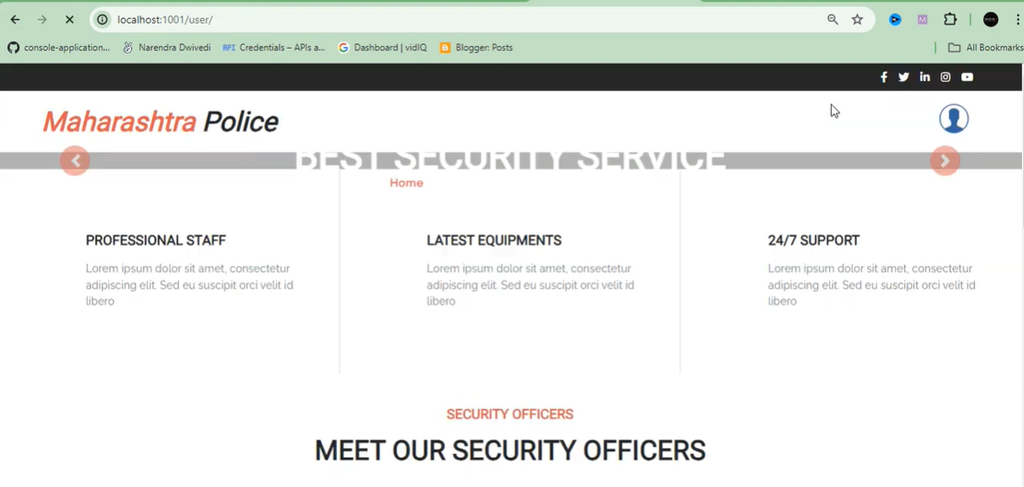
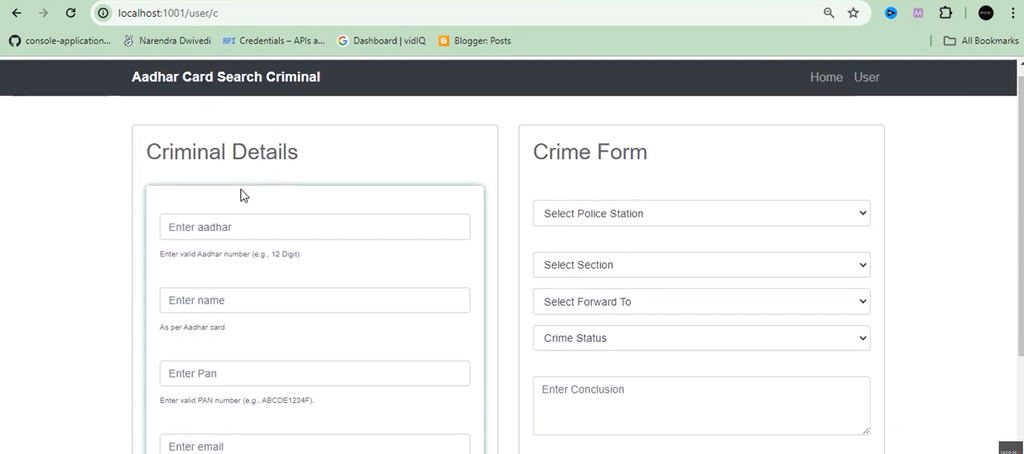
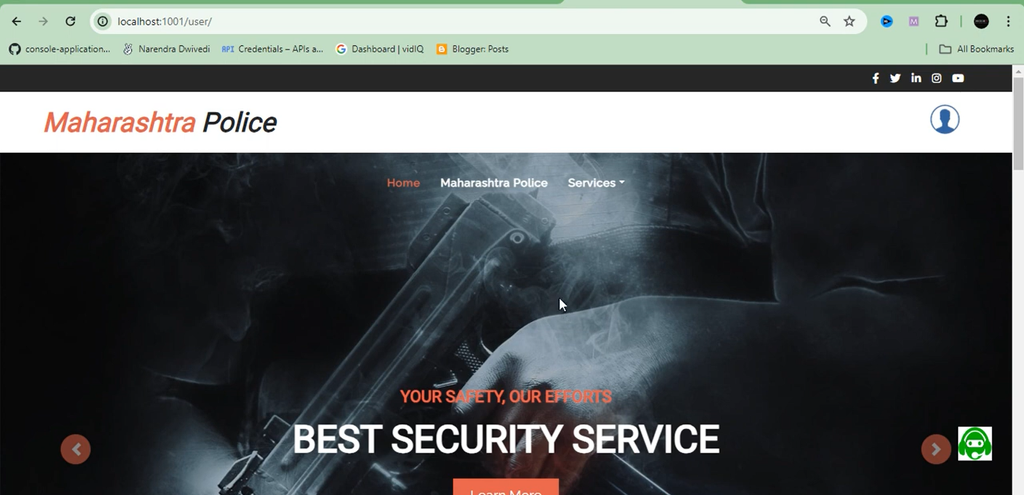
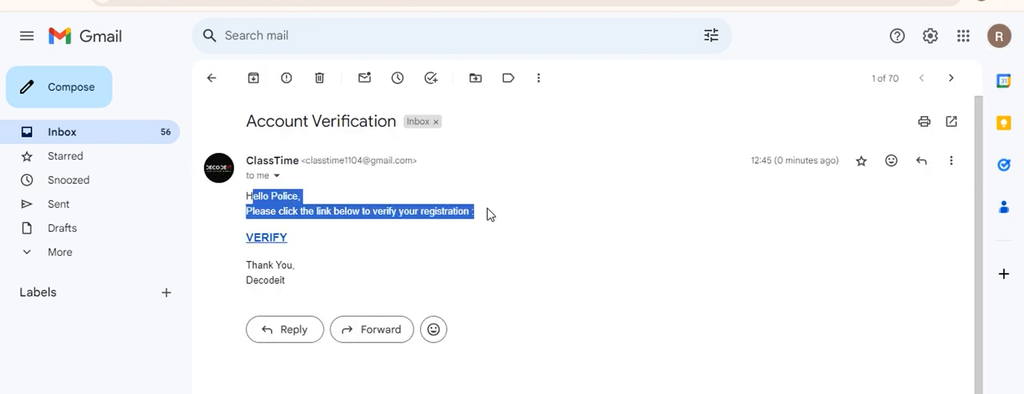
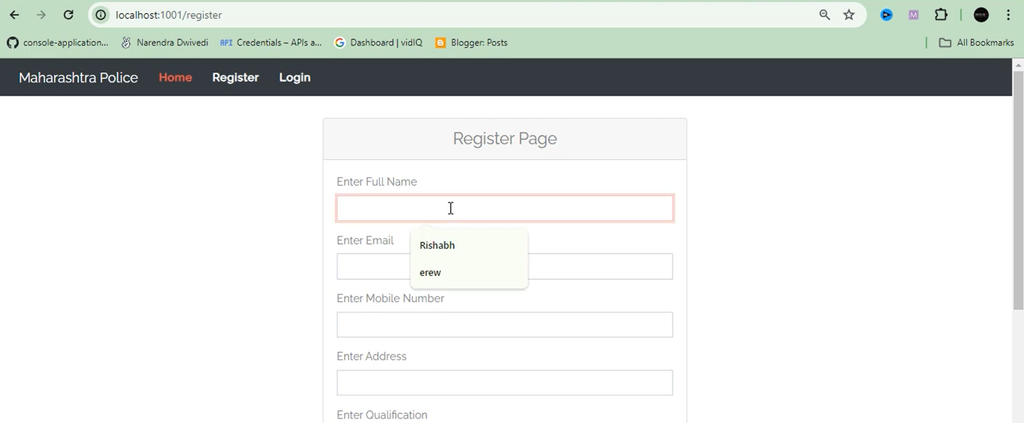
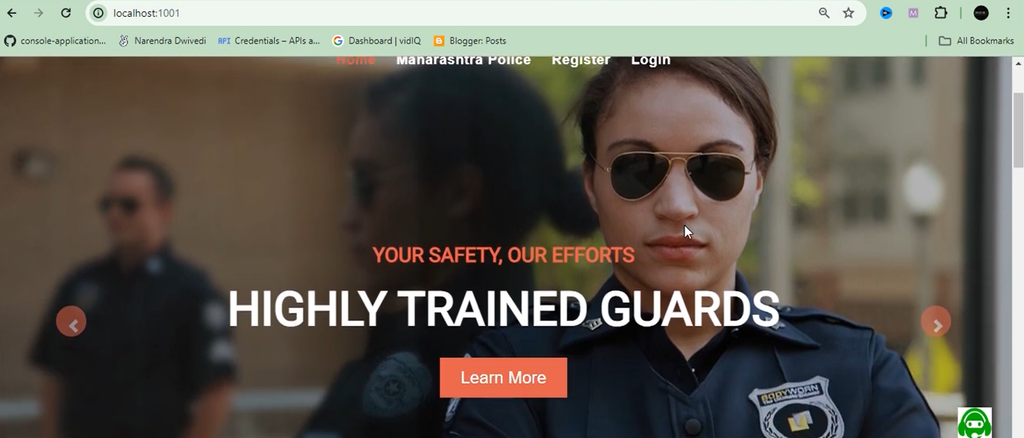
Project Screenshots and Demo Video
How to Download
Get This Project
The complete package is available so you can run, study, and submit it with confidence. It includes:
- Full Source Code
- Project Report
- Synopsis
- PPT Presentation
For any queries or a quick response, reach out on WhatsApp: +91 79834 34684
YT:- DecodeIT
Conclusion
The Criminal Record Portal using Spring Boot, Hibernate, MySQL, HTML, CSS, Bootstrap, and JavaScript is a useful project for learning how to build a database-driven Java web application.
The project demonstrates important concepts such as backend development with Spring Boot, ORM using Hibernate, MySQL database integration, CRUD operations, authentication, validation, and responsive frontend development.
For real-world deployment, applications dealing with criminal or other sensitive records should use appropriate authorization, encryption, auditing, data-retention controls, privacy protections, and compliance requirements.
Keywords
Criminal Record Portal, Criminal Record Management System, Criminal Record Portal Using Spring Boot, Spring Boot Project, Hibernate Project, MySQL Project, Java Project, J2EE Project, Java Web Application, Spring Boot Hibernate Project, Criminal Database Management System, HTML CSS Bootstrap JavaScript Project