Car Price Prediction System Using Machine Learning
If you are a final year student and want a real-world ML project that looks professional in demo + viva, then a Car Price Prediction System is one of the best choices right now.
This project predicts the resale value of a used car using Machine Learning by learning patterns from real datasets (brand, year, fuel type, kms driven, transmission, owner type, etc.). Its practical, trending, and easy to present in college.
Complete Advance AI Topics: Click Here
Real Time Projects on YouTube:- DecodeIT
What is Car Price Prediction?
Car price prediction is a Machine Learning application where a model is trained on historical used-car data and then it predicts the expected selling price for new inputs.
Example: If a user enters: Maruti Swift, 2018, Petrol, 45,000 km, Manual the system returns an estimated resale price.
Problem Statement
The used car market has a major issue: pricing is not consistent. Many sellers overprice, buyers get confused, and dealers sometimes manipulate prices. So we need a system that predicts a fair resale price using data-driven ML models.
- Manual pricing is inaccurate and time-consuming
- Different factors impact price in complex ways
- Users need a quick estimate before buying/selling
Why This Project is NEW (Not a Basic College Project)
Most students do only Notebook + Linear Regression and stop there. But in 2026, teachers and interviewers expect a bit more. So this project is upgraded like:
- Proper preprocessing pipeline (cleaning, encoding, scaling if needed)
- Multiple model comparison (Linear Regression vs Random Forest / XGBoost optional)
- Accuracy + evaluation metrics (R², MAE, RMSE)
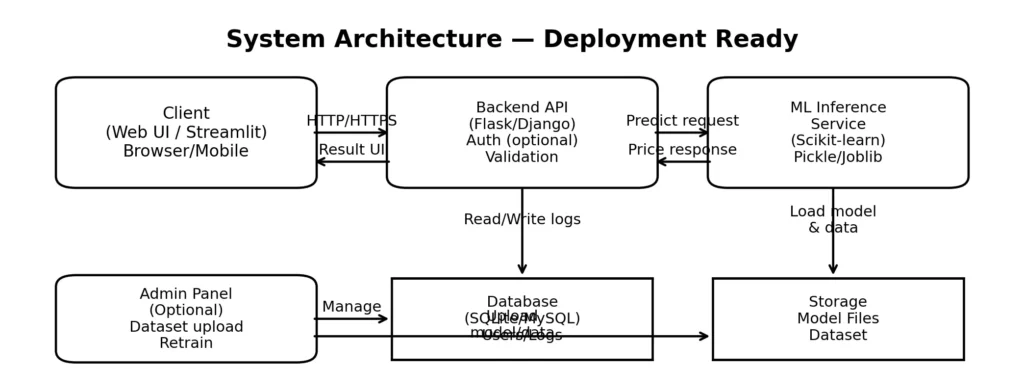
- Web UI (Streamlit / Flask / Django based)
- Model saved and loaded (Pickle/Joblib) for real-time prediction
- Ready for deployment (optional cloud hosting)
Real-World Use Cases
- Used Car Dealers: Quick valuation tool for inventory pricing
- Car Marketplace Apps: Show fair price range to users
- Loan/Insurance Companies: Estimate asset value for approvals
- Customers: Decide whether the seller is pricing fair or not
Key Features (MVP + Advanced)
MVP Features
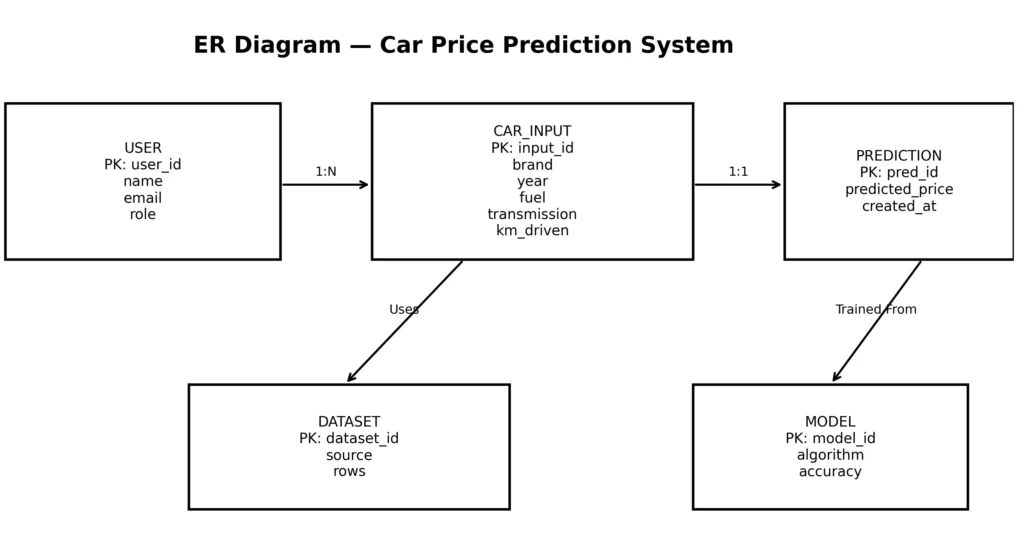
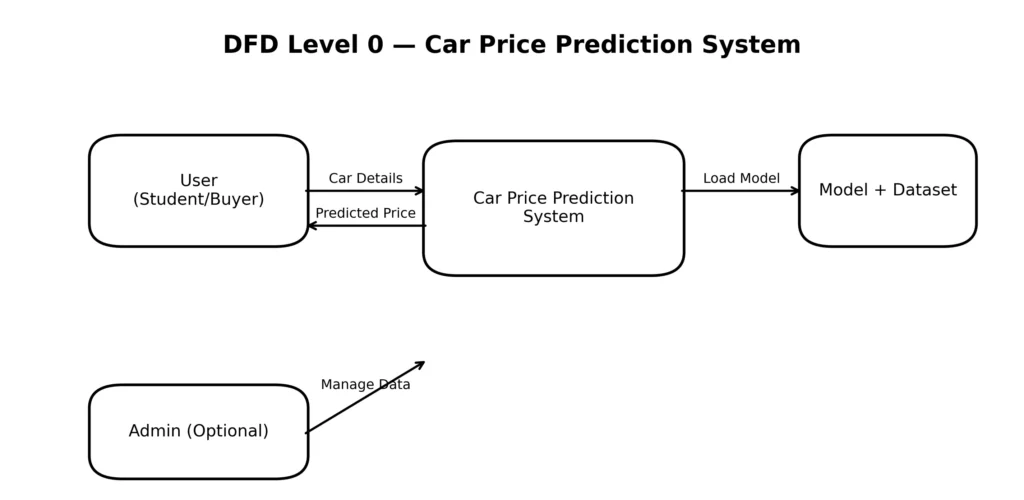
- Car details input form (brand, model, year, fuel, kms, transmission, etc.)
- Trained ML model for prediction
- Prediction output in INR (or your selected currency)
- Basic performance metrics
- Model saving/loading for fast prediction
Advanced Features (Optional Premium)
- Admin panel to upload new dataset and retrain model
- Charts: feature importance, error distribution, price trends
- API endpoint for integration (REST API)
- Confidence range / price band (approx) for better trust
- Deployment ready guide (Render/Railway/PythonAnywhere)
Tech Stack
- Language: Python
- Libraries: Pandas, NumPy, Scikit-learn (XGBoost optional)
- Visualization: Matplotlib / Seaborn
- Web App: Streamlit (easy) / Flask (medium) / Django (pro)
- Database (optional): SQLite / MySQL
Dataset Details
This project uses a used car dataset typically containing fields like:
- Car Name / Brand
- Year of Purchase
- Fuel Type
- Transmission
- Kilometers Driven
- Owner Type
- Present Price / Selling Price (Target)
Then we clean, encode categorical columns, and train ML model to predict price.
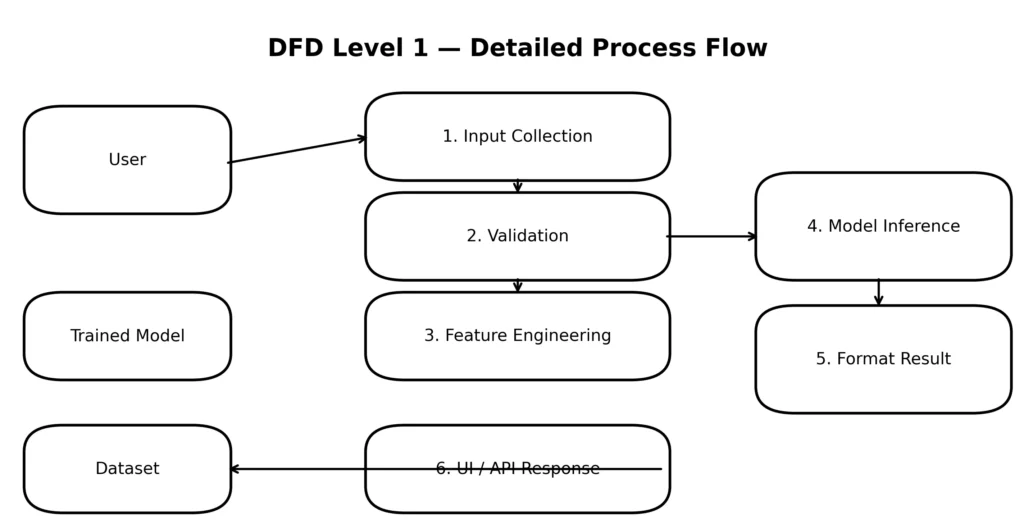
Methodology (How it Works)
- Collect dataset (CSV)
- Handle missing values + remove unwanted columns
- Encode categorical features (Fuel/Transmission/Brand)
- Train-test split
- Train models (Linear Regression, Random Forest etc.)
- Evaluate using R², MAE, RMSE
- Save best model and use in web UI for predictions
How to Download
The complete package is available so you can run, study, and submit it with confidence. It includes:
- Full Source Code
- Project Report
- Synopsis
- PPT Presentation
Demo Video
Screenshot


Installation Guide
Step 1: Install Python and Visual Studio Code on your computer.
Step 2: Extract the project files and open the project folder in Visual Studio Code.
Step 3: Open Terminal > New Terminal in VS Code.
Step 4: Create a virtual environment using the following command:
python -m venv venvStep 5: Activate the virtual environment on Windows:
venv\Scripts\activateStep 6: Install the required project dependencies.
If the project includes a requirements.txt file, run:
pip install -r requirements.txtOtherwise, install the required libraries according to the project source code. Common machine learning dependencies include:
pip install pandas numpy scikit-learn matplotlib seaborn joblibIf the project uses Streamlit, install it using:
pip install streamlitStep 7: Check the project folder for the dataset, trained model, configuration files, and main application file.
Step 8: Run the application using the command appropriate for its framework.
For Streamlit projects:
streamlit run app.pyFor Flask or Django projects, use the startup command specified in the supplied source code.
Step 9: Open the local URL displayed in the terminal to access the application in your browser.
How to Present in College Demo
- Show dataset and explain features
- Show training + evaluation results
- Open web app and enter sample input
- Display predicted price
- Explain how ML makes decision using trained patterns
FAQ
Q1. What is the Car Price Prediction System?
It is a machine learning project that estimates the resale price of used cars from vehicle specifications and historical data.
Q2. Which programming language is used?
Python is the main programming language.
Q3. Which machine learning algorithms are described?
The article describes Linear Regression and Random Forest, with XGBoost as an optional model.
Q4. Which input features are used for prediction?
The dataset may include car brand or name, purchase year, fuel type, transmission, kilometers driven, owner type, and selling price as the target variable.
Q5. How is model performance evaluated?
The described evaluation metrics include R², Mean Absolute Error (MAE), and Root Mean Squared Error (RMSE).
Q6. Which web framework does the project use?
The article lists Streamlit, Flask, and Django as possible options. The exact framework depends on the supplied implementation.
Q7. Can the project include an admin panel?
An admin panel for dataset uploads and model retraining is described as an optional advanced feature.
Q8. Can the project be deployed online?
Yes. The article describes cloud deployment as an optional extension, depending on the selected framework and hosting environment.
Conclusion
The Car Price Prediction System using Machine Learning is a strong final year project because it solves a real-world problem, uses trending ML concepts, and can be presented as a full application (not only notebook).
car price prediction using machine learning github, car price prediction using machine learning project report, car price prediction project report pdf, car price prediction using machine learning ppt, car price prediction dataset, car price prediction using machine learning pdf, car price prediction using machine learning kaggle, car price prediction using linear regression, car price prediction system using machine learning github, car price prediction system using machine learning ppt, car price prediction system using machine learning using python, car price prediction system using machine learning pdf, car price prediction system using machine learning in python