Building BusGo A Modern Bus Ticketing System with Real-Time Tracking
Booking an intercity bus in many South Asian countries is still a confusing and time-consuming process. Passengers often need to call multiple counters, ask about seat availability, and still have no clear idea where the bus actually is after departure. BusGo was built to fix this problem with a simple, realistic, and student-friendly web application.
BusGo is not an over-engineered system. It focuses on core features that matter in real life, while keeping the technology stack familiar and easy to understand. The project uses Java, JSP, Servlets, JDBC, and MySQL, along with a few modern front-end libraries to create a complete end-to-end bus booking experience.
Project tutorials, coding guides & placement tips for students.
Project Overview
BusGo is an online bus ticket booking system designed mainly for routes across Bangladesh and nearby regions. It handles the full booking lifecycle from start to finish.
Passengers can register, log in, search available routes, choose seats, make a booking, and complete a simulated payment. After booking, they can also track the live location of their bus on a map. Admin users can monitor bookings, payments, and overall sales through a dashboard.
Technology Stack
- Backend: Java 11, JSP, Servlets, JDBC
- Server: Apache Tomcat 9
- Database: MySQL (ticketing_system)
- Frontend: JSP, Bootstrap 4, Font Awesome
- JavaScript Libraries: Leaflet.js, Chart.js, jQuery
The main goal of BusGo is to feel like a real production system, while still being simple enough for students and beginners to read, run, and extend.
Database Design
The database is the foundation of BusGo. All tables are defined in a single SQL file and include seeded demo data so the system works immediately after setup.
Key tables include:
- stations Stores bus terminals and stops with name, address, and contact details.
- buses Represents buses in the fleet, including seat capacity, type, and operator.
- destinations Defines routes, schedules, fares, and seat ranges between stations.
- booking Stores passenger bookings, journey dates, seat numbers, and payment status.
- users Manages both passengers and admin accounts.
- bus_locations Holds real-time GPS data like latitude, longitude, speed, and status.
- payments Records card payment details with only the last four digits stored.
The schema is normalized and realistic, which makes it easy to add reports, analytics, or new features later.
Backend Architecture
BusGo follows a clean and understandable MVC-style structure.
- Model classes represent database tables and handle business logic such as users, bookings, routes, buses, and payments.
- Database connection is handled centrally using a single JDBC utility class, avoiding repeated connection code.
- Servlets control request and response flow for login, registration, payments, and live tracking APIs.
- JSP pages focus on UI and user interaction.
This separation keeps the project readable and beginner-friendly, without adding unnecessary complexity.
Core Features
User Registration and Login
Passengers can register using basic details like name, email, phone, and password. Login is session-based, allowing the system to identify whether the user is a passenger or an admin. Security is kept simple for learning purposes and can be improved later with password hashing.
Route Search and Seat Booking
Users can search buses by selecting source and destination stations. Available routes show bus type, operator, schedule, and fare. Passengers select seats and confirm bookings, which are stored even before payment is completed.
Real-Time Bus Tracking
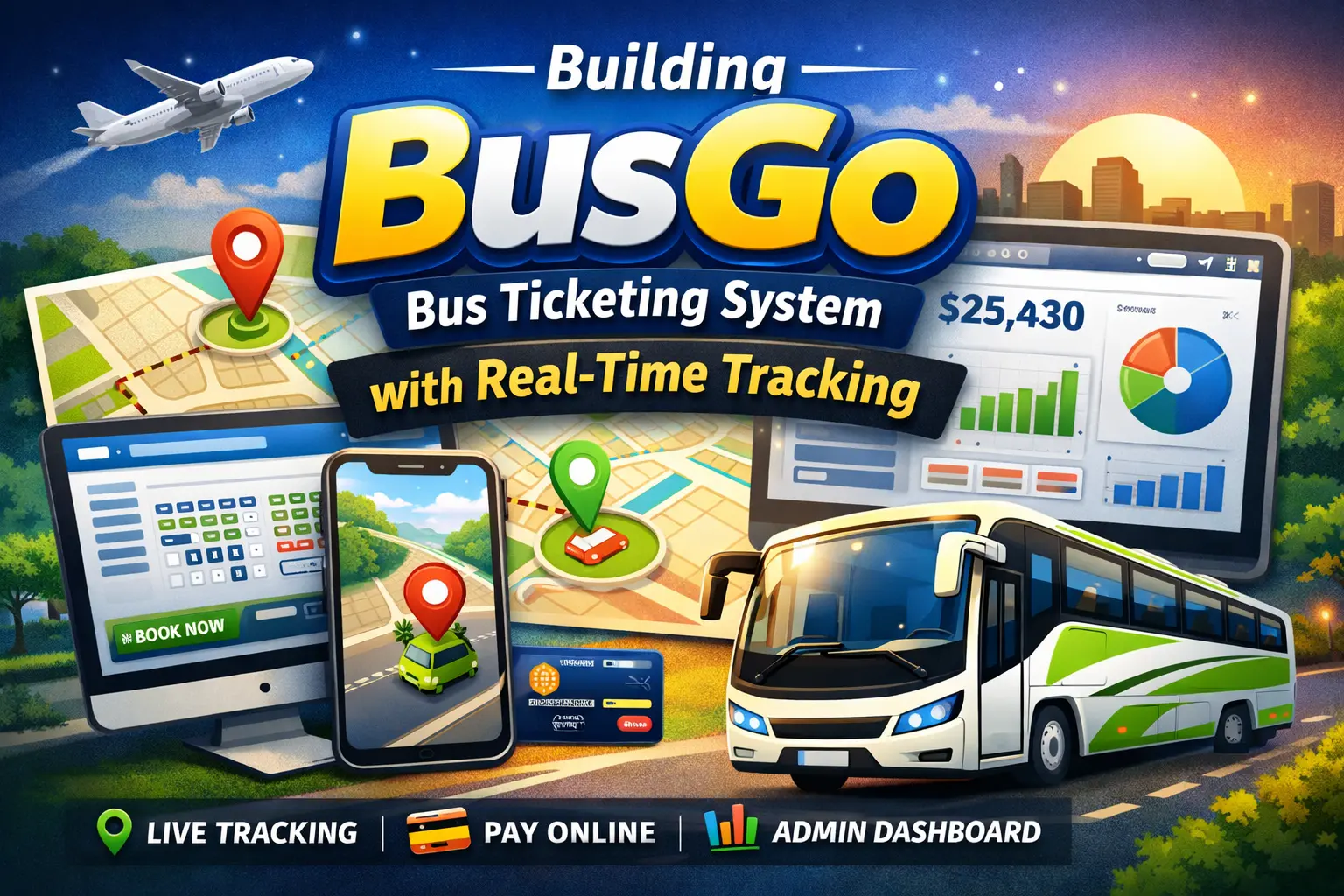
BusGo includes a live tracking page where users can see active buses on a map. Bus positions are fetched from the database through an API endpoint. For demo purposes, the system can simulate movement by updating coordinates automatically, which makes the feature feel real without external GPS hardware.
Payment Simulation
Instead of a real payment gateway, BusGo uses a mock credit-card system. The checkout form validates card details, generates a fake transaction ID, and stores limited card data safely. Once payment is complete, the related booking is marked as paid.
Admin Sales Dashboard
Admins get a summarized view of system activity. The dashboard shows total revenue, successful payments, pending bookings, and recent transactions. Charts provide a clear visual breakdown of payment methods and sales data.
What You Can Learn from BusGo
BusGo is a strong learning project for students and junior developers. It covers real-world concepts like relational database design, session management, MVC architecture, and integration of JavaScript libraries with a Java backend.
It also demonstrates how to simulate complex features such as live tracking and payments without needing expensive infrastructure or third-party services.
Possible improvements include adding encrypted passwords, real payment gateway integration, full admin CRUD panels, and mobile apps for drivers to push real GPS data.
Screenshot
Bus Ticketing System with Real-Time Tracking
- Movie Recommender System Project in Python
- Trending Final Year Project Ideas 2026 for BCA, MCA and B.Tech Students
- Student Marks Predictor Project in Python-Free Source Code
- CSC Banking Management System Software for CSC Centers
- Multi-Agent Research Assistant in Python
BusGo proves that classic Java web technologies can still be used to build modern, useful applications. By combining JSP and Servlets with MySQL and simple front-end libraries, the project delivers a realistic bus booking system with ticketing, tracking, and sales analytics.
For students looking for a practical final-year project or developers wanting hands-on experience with full-stack Java, BusGo is a reliable and expandable starting point.
bus ticketing system
online bus ticketing system
smart bus ticketing system
online bus ticketing system tanzania
automated bus ticketing system
data flow diagram of bus ticketing system
conductorless bus ticketing system
open source bus ticketing system
online bus ticketing system pdf
bus reservation system architecture diagram