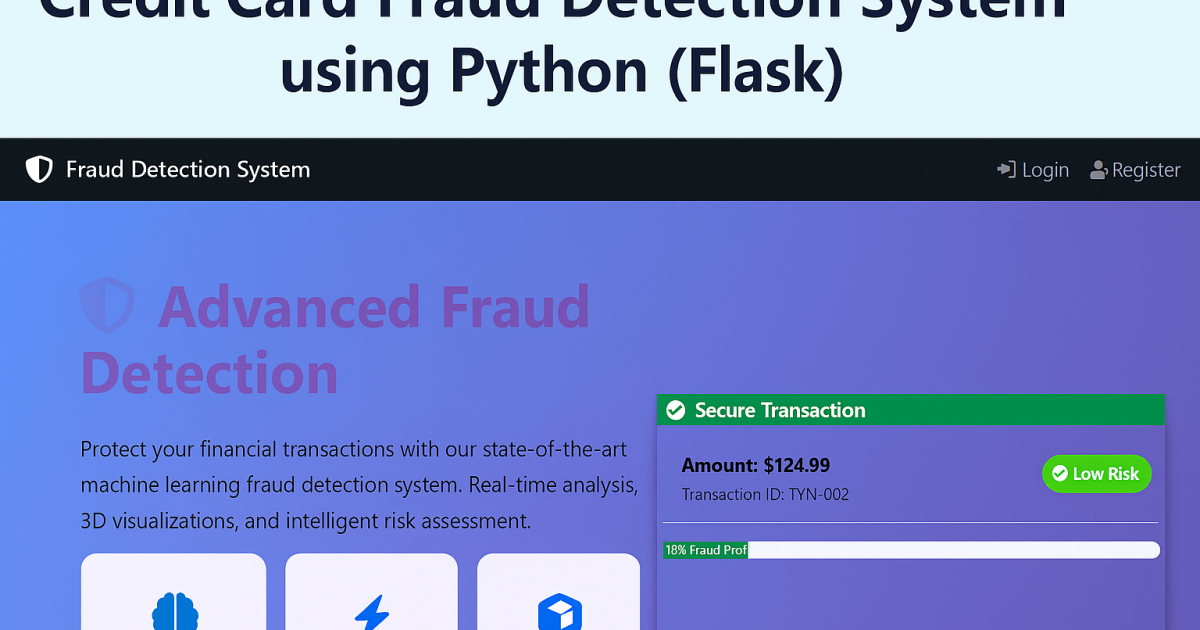
Credit Card Fraud Detection System
Credit Card Fraud Detection System is a machine learning project that uses historical data and predictive algorithms to automatically identify fraudulent transaction. This project is ideal for data science students, final year projects, and developers learning how to build end-to-end ML applications with a web interface.
What This Project Does
The Credit Card Fraud Detection System system allows users to input transaction amount, time, location and receive an instant prediction of fraudulent transaction. It uses trained machine learning models to analyse patterns in data and deliver accurate results through a simple web interface built with Python and Flask or Django.
Key Features
- Real-Time Prediction — Enter data and get instant results without page reload
- Multiple ML Algorithms — Trained using Isolation Forest, Random Forest, XGBoost for best accuracy
- Interactive Web Interface — Clean Bootstrap-based UI, no technical skills needed to use
- Model Accuracy Display — Shows model accuracy score and confusion matrix
- Data Visualisation — Charts and graphs to explain the prediction results
- Dataset Integration — Pre-trained on Credit card transaction dataset (Kaggle)
- Downloadable Source Code — Complete project with Jupyter notebook and Flask app
Technologies Used
- Language: Python 3.8+
- ML Libraries: Scikit-learn, Pandas, NumPy, Matplotlib, Seaborn
- Web Framework: Flask or Django
- Frontend: HTML, CSS, Bootstrap 5, JavaScript
- Dataset: Credit card transaction dataset (Kaggle)
- IDE: Jupyter Notebook / VS Code / PyCharm
System Requirements
- Python 3.8 or higher
- pip package manager
- 4GB RAM minimum (8GB recommended)
- Windows / macOS / Linux
How to Install and Run
- Download the source code using the button below
- Extract the zip file to your project folder
- Open terminal / command prompt and navigate to the project folder:
cd credit-card-fraud-detection-system - Install required libraries:
pip install -r requirements.txt - Run the Flask application:
python app.py - Open your browser and go to
http://localhost:5000 - Enter the input values and click Predict to see the result
How the Model Works
The machine learning model was trained on the Credit card transaction dataset (Kaggle). The training pipeline involves:
- Data Preprocessing — Handling missing values, encoding categorical variables, feature scaling
- Exploratory Data Analysis — Understanding data distribution and correlations
- Model Training — Training multiple algorithms (Isolation Forest, Random Forest, XGBoost) and comparing accuracy
- Model Evaluation — Using accuracy score, precision, recall, F1-score, and confusion matrix
- Model Deployment — Saving the best model with pickle and deploying via Flask
Project Structure
credit-card-fraud-detection-system/
├── app.py              ← Flask application
├── model.pkl           ← Trained ML model
├── templates/
│   ├── index.html      ← Input form
│   └── result.html     ← Prediction result page
├── static/
│   └── css/style.css   ← Styling
├── notebook/
│   └── model_training.ipynb  ← Jupyter notebook
├── dataset/
│   └── data.csv        ← Training dataset
└── requirements.txt    ← Python dependencies
Frequently Asked Questions
What accuracy does this model achieve?
The model achieves approximately 85–95% accuracy depending on the dataset split and algorithm used. The project includes a model comparison section in the Jupyter notebook showing results for all tested algorithms.
Can I use this project for my final year college submission?
Yes, this project is suitable for BCA, MCA, B.Tech, and B.Sc final year submissions. It includes a complete dataset, trained model, web interface, and documentation.
What if I get a “ModuleNotFoundError” when running the app?
Run pip install -r requirements.txt again to make sure all dependencies are installed. If a specific module is missing, install it with pip install module-name.
Can I modify the model and retrain it?
Yes. Open the Jupyter notebook in the notebook/ folder to see the full training code. You can change the algorithm, tune hyperparameters, or use a different dataset.
Conclusion
The Credit Card Fraud Detection System project is a complete machine learning solution that demonstrates how to collect data, train a model, and deploy it as a web application. Whether you need it for a final year project, a portfolio piece, or to learn data science, this project covers the full ML pipeline from preprocessing to deployment. Download the source code below and start building.
Introducing Credit Card Fraud Detection System – a powerful, AI-driven credit card fraud detection system developed as a secure web application. Built using robust Python frameworks and integrated with machine learning capabilities, this project is ideal for final-year students, academic submissions, or professional prototype deployment.
📊 Project Information Table
| Project Name | Credit Card Fraud Detection System |
|---|---|
| Language | Python (Flask) |
| Database | MySQL |
| Developer | UPDATEGADH |
Download New Real Time Projects :-Click here
🌟 Available Features
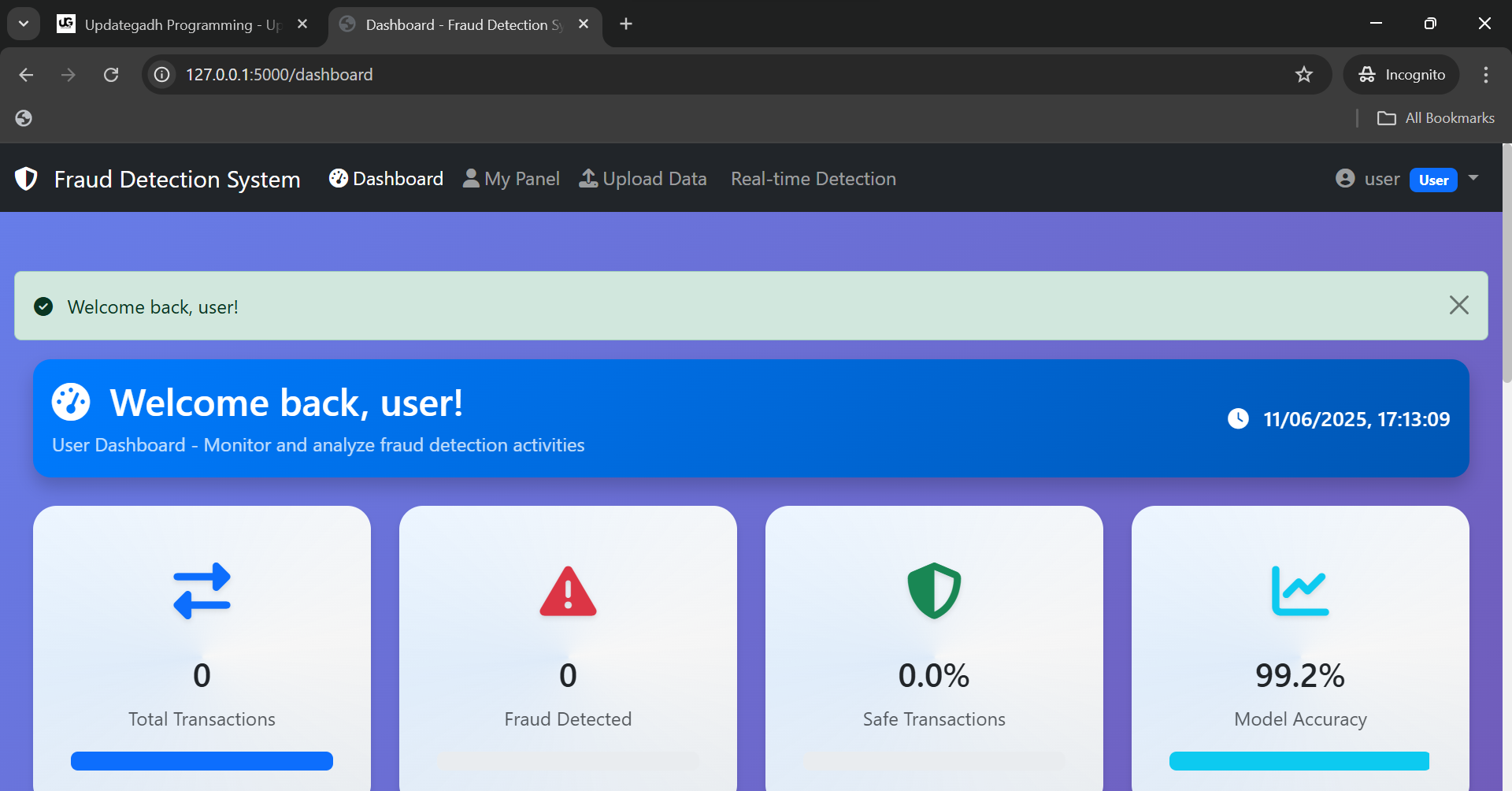
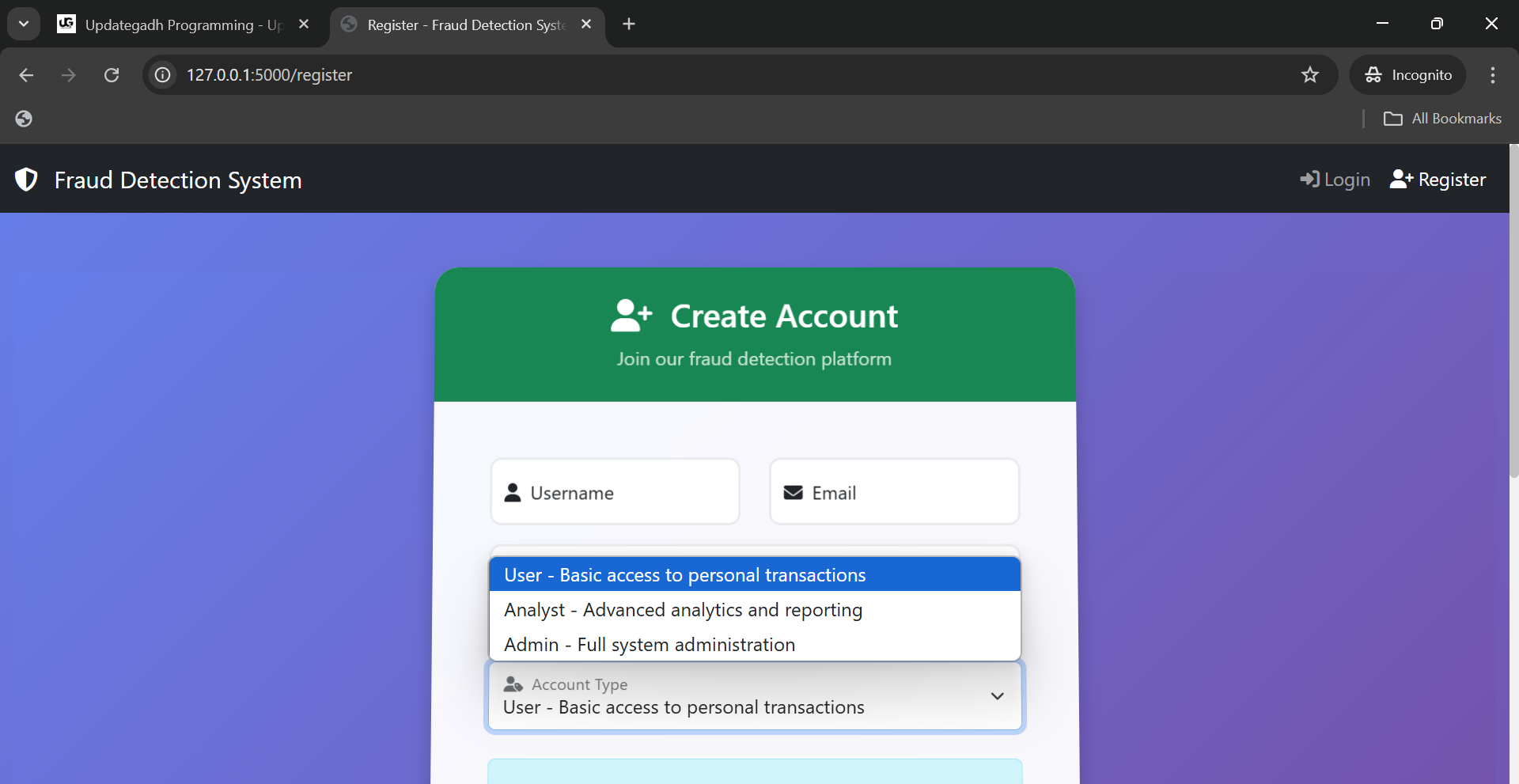
- 👥 User Authentication (Admin, Analyst, and General Users)
- 📁 File Uploads & Management
- 🔐 Password Hashing with Security Measures
- 📈 AI/ML Model Integration for Fraud Detection
- 🧠 Trained Model Support via
ml_model.py - 📊 Transaction Analysis Dashboard
- 💬 Role-Based Dashboard Management
- ✅ SQLAlchemy ORM Integration for Database Handling
- 🌐 Web Interface with Flask and Template Rendering
📌 Key Technologies Used
- Language: Python
- Framework: Flask
- Database: MySQL (via SQLAlchemy)
- Libraries: Flask-Login, SQLAlchemy, Werkzeug, scikit-learn
- Frontend: HTML templates (Jinja2), Bootstrap-styled UI




credit card fraud detection system project
credit card fraud detection system github
credit card fraud detection using machine learning
credit card fraud detection system python
credit card fraud detection project report pdf
credit card fraud detection ppt
credit card fraud detection dataset
credit card fraud detection research paper
🎓 Need Complete Final Year Project?
Get Source Code + Report + PPT + Viva Questions (Instant Access)
🛒 Visit UpdateGadh Store →