
Email Spam Detection
The Email Spam Detection Web App Using Python and Flask is a machine learning-based web application designed to identify spam messages quickly and efficiently. The project applies machine learning techniques for text classification, allowing users to enter message text and determine whether the message is genuine or unwanted.
The system provides a simple and interactive interface where users can enter a message and receive an immediate spam prediction. Behind the application, a trained machine learning model processes the submitted text and classifies it into spam or legitimate content.
This project provides practical experience with Python, Flask, Machine Learning, Natural Language Processing (NLP), text classification, and web application development. It is suitable for students and developers who want to understand how machine learning can be integrated into a functional web application.
Table of Contents
Email Spam Detection – Project Overview
The main purpose of this project is to automate the process of detecting unwanted messages. Instead of manually checking every message, users can enter the message into the web application and allow the trained machine learning model to determine whether it is spam or genuine.
The Flask backend receives the input text, processes it using the integrated text preprocessing pipeline, and sends the processed data to the trained machine learning model. The prediction is then displayed through the web interface.
The project demonstrates how artificial intelligence and machine learning can be applied to a real-world communication and email security problem.
| Project Detail | Information |
|---|---|
| Project Name | Email Spam Detection |
| Language Used | Python (Flask) |
| Database | None |
| Project Type | Web Application |
| Machine Learning | Text Classification |
Key Features
1. Real-Time SMS Spam Detection
The application allows users to check messages instantly. After entering a message, the system processes the text and provides immediate feedback about whether the message is spam or genuine.
This real-time prediction makes the application simple to use and allows users to identify unwanted messages without manually analyzing their content.
2. Flask-Based Interactive Web UI
The web application is developed using Flask, providing an interactive interface where users can enter message text and receive spam predictions.
The Flask backend handles the submitted text and connects the user interface with the trained machine learning model.
3. Integrated Machine Learning Model
The machine learning model is already trained and integrated into the application using pickle files. This allows the system to make predictions without retraining the model every time a user checks a message.
The pre-trained model can process the input text and classify it according to the learned spam detection patterns.
4. Text Preprocessing with Vectorizer
Before the machine learning model analyzes a message, the application performs text preprocessing. The system uses techniques such as tokenization and vectorization to convert raw text into a format that can be understood by the machine learning model.
This preprocessing step helps transform the user’s message into suitable numerical features for classification.
5. Responsive HTML/CSS Interface
The frontend is created using clean HTML and CSS. The interface is designed to be simple and easy to navigate across different screen sizes, including desktops, tablets, and mobile devices.
Users do not need advanced technical knowledge to interact with the application. They can simply enter the message and check the prediction.
6. Deployment Ready on Render.com
The project is designed to be deployment-ready on Render.com. This allows the application to be hosted online and made accessible through the web.
The deployment-ready structure makes the project suitable for users who want to move the application from a local development environment to an online platform.
7. Complete Project Resources
The project includes the important resources required for learning and working with the Email Spam Detection application.
The package includes:
- Full source code
- Trained machine learning model
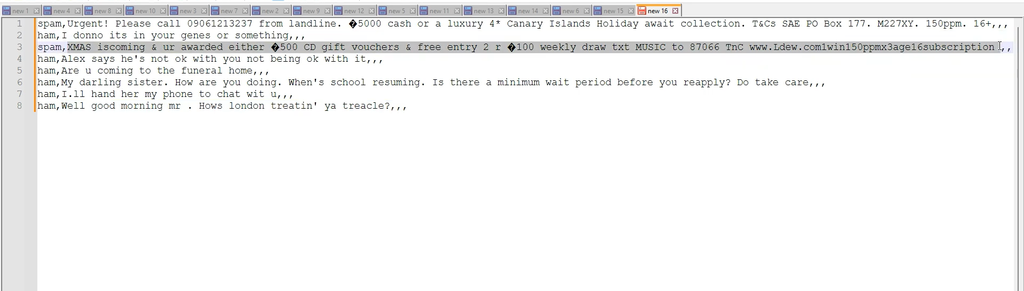
- Dataset
- Jupyter Notebook for training and testing
These resources provide students and developers with a complete hands-on learning experience covering both model development and web application integration.
How Email Spam Detection Works
The working process of the application can be divided into several simple steps.
Step 1: Enter Message
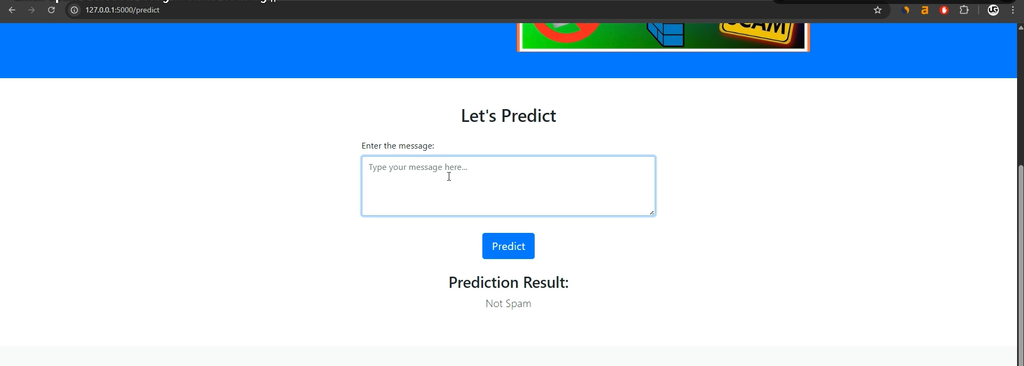
The user enters the message text into the web application’s input interface.
Step 2: Text Preprocessing
The submitted message is processed using text preprocessing techniques. Tokenization and vectorization are applied to convert the raw text into a suitable format for machine learning.
Step 3: Machine Learning Prediction
The processed text is passed to the pre-trained machine learning model. The model analyzes the input based on the patterns learned during training.
Step 4: Display Result
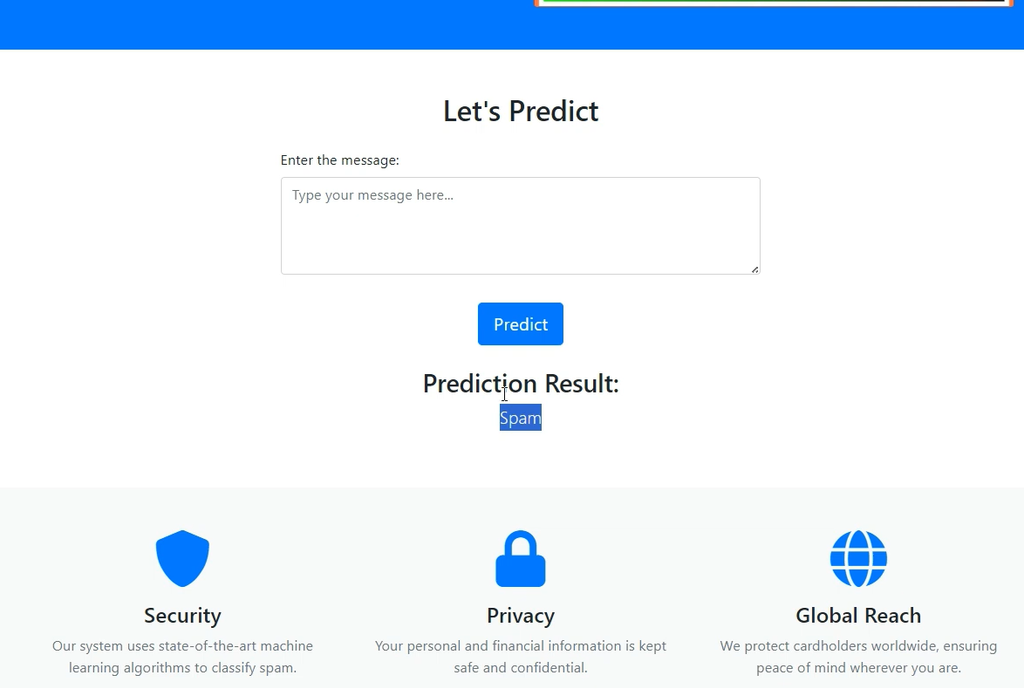
After classification, the application displays the prediction to the user, indicating whether the submitted message is spam or genuine.
This complete process allows users to check messages quickly through a simple web interface.
Machine Learning and NLP
Machine learning is the core technology behind the Email Spam Detection project. The application treats spam detection as a text classification problem, where message content is analyzed and assigned to a category.
Natural Language Processing techniques are used to process the text before it is supplied to the machine learning model. The vectorizer converts textual information into a machine-readable representation that can be used for classification.
The trained model is stored using pickle files and loaded by the Flask application when predictions are required.
Learning Outcomes
Working on this project provides practical knowledge in several important areas of machine learning and web development.
- Understanding how machine learning models classify text into different categories.
- Learning how to integrate AI and machine learning into a Python Flask web application.
- Understanding how NLP techniques are used to analyze and process text data.
- Learning how trained machine learning models can be integrated into web applications.
- Understanding how model performance can be evaluated and classification accuracy can be improved.
- Learning how a machine learning project can be prepared for online deployment.
Technology Used
| Technology | Purpose |
|---|---|
| Python | Application and machine learning development |
| Flask | Web application backend |
| Machine Learning | Spam and genuine message classification |
| NLP | Text processing and analysis |
| Vectorizer | Conversion of text into machine-readable features |
| Pickle | Storage and integration of the trained model |
| HTML | Frontend structure |
| CSS | Frontend styling and responsive interface |
| Jupyter Notebook | Model training and testing |
Screenshots:-
How to Download
Get This Project
The complete package is available so you can run, study, and submit it with confidence. It includes:
- Full Source Code
- Project Report
- Synopsis
- PPT Presentation
For any queries or a quick response, reach out on WhatsApp: +91 79834 34684
Why This Project Is Useful
Email and SMS spam detection is a practical application of machine learning and text classification. This project provides a simple way to understand how raw text can be processed and classified automatically.
For students, the project combines multiple concepts in a single application. They can learn about machine learning model training, NLP, text preprocessing, Flask web development, model integration, and deployment.
The project also demonstrates how a trained model can be converted into a usable web application instead of being used only inside a notebook.
Project Workflow
The complete application workflow can be summarized as follows:
- User opens the Email Spam Detection web application.
- User enters the message text.
- Flask receives the submitted message.
- The text preprocessing process prepares the input.
- The vectorizer converts the text into suitable features.
- The pre-trained machine learning model analyzes the processed input.
- The application classifies the message as spam or genuine.
- The prediction is displayed to the user.
Deployment
The project is prepared for deployment using Render.com. This makes it possible to host the Flask application online instead of running it only on a local computer.
The deployment-ready structure also makes the project suitable for demonstrating a complete machine learning application from model development to web deployment.
Conclusion
The Email Spam Detection Web App Using Python and Flask is a practical machine learning project that demonstrates how text classification and NLP can be used to identify unwanted messages.
The application provides real-time spam detection, an interactive Flask interface, a pre-trained machine learning model, text preprocessing with vectorization, a responsive HTML/CSS frontend, and deployment support through Render.com.
With the included source code, trained model, dataset, and Jupyter Notebook, the project provides students and developers with hands-on experience in Python, Flask, Machine Learning, NLP, text classification, and AI-based web applications.
Keywords: email spam detection using python, email spam detection using machine learning, email spam detection project, spam detection using python, spam email detection using machine learning, sms spam detection using python, email spam classification using machine learning, email spam detection using nlp, spam detection project in python, machine learning spam detection project email spam detection web app github
email spam detection web app download
email spam detection web app python
email spam detection using nlp github
machine learning email spam detection
email spam detection using deep learning
fake email detection
phishing email detection project github