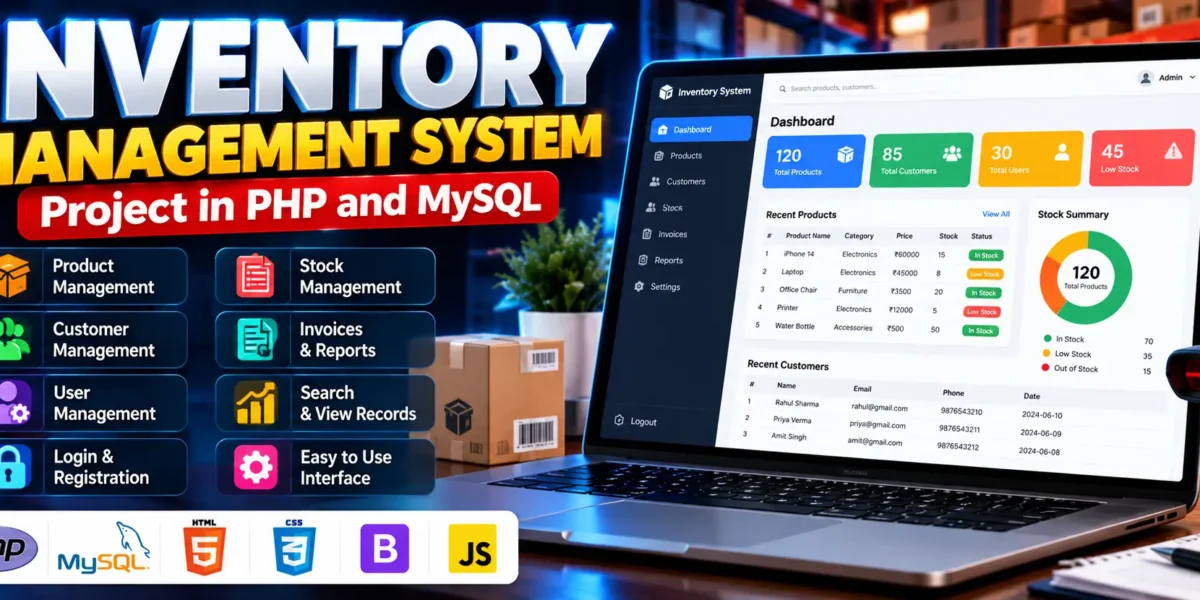
Inventory Management System Project in PHP and MySQL
The Inventory Management System Project in PHP and MySQL is a web-based application designed to manage products, customers, and user information digitally. It helps organize inventory-related records, reduce manual paperwork, and make information easier to store, update, and retrieve.
Developed using PHP, JavaScript, and MySQL, this project demonstrates essential web development concepts, including user authentication, product management, customer records, user management, and CRUD operations. It is suitable for BCA, MCA, and other computer application students who want practical experience building database-driven applications.
Complete Advance AI Topics: Click Here
Real Time Projects on YouTube:- DecodeIT
What Is an Inventory Management System?
An Inventory Management System is a software application that helps businesses maintain product information and organize related records. It provides a centralized platform for managing products, customers, and registered users instead of relying entirely on manual record-keeping.
This project includes login and registration functionality, product management, customer management, and user management. These modules demonstrate how a web application can organize business information using a backend and database.
What Are the Project Details?
The project uses PHP for backend processing, JavaScript for frontend interactions, and MySQL for storing application data. Its web-based structure makes it useful for learning how different application components work together.
| Project Details | Description |
|---|---|
| Project Name | Inventory Management System |
| Languages Used | PHP, JavaScript |
| Database | MySQL |
| Project Type | Web Application |
How Does the Inventory Management System Work?
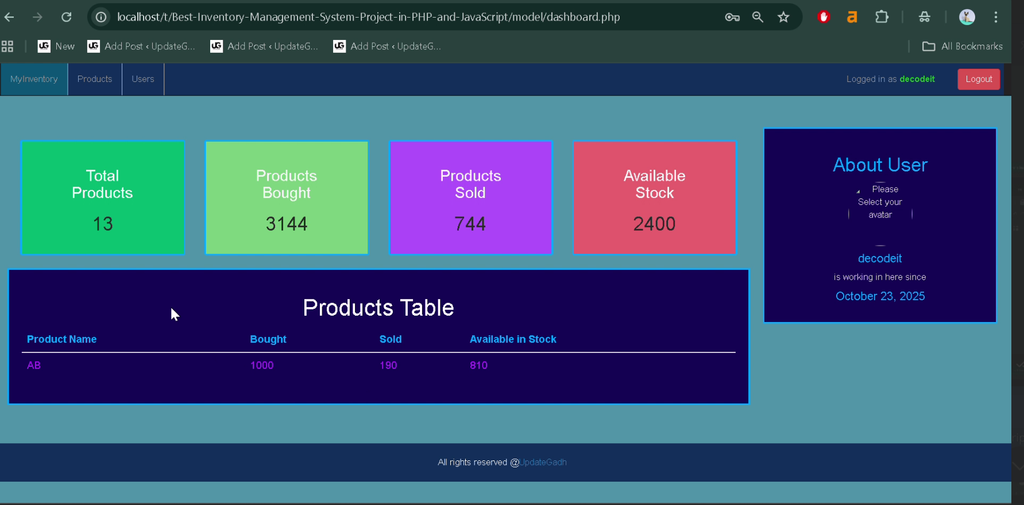
The system allows authorized users to access inventory-related functions through a web interface. Administrators can manage product records, view customer information, and monitor registered user accounts according to the available functionality.
PHP processes application requests and communicates with MySQL to store and retrieve information. JavaScript supports frontend interactions, while database operations allow users to create, view, update, and delete records.
What Features Are Available in the Inventory Management System?
The project includes user authentication, product management, customer management, and user management. Together, these features provide a practical example of how a database-driven application can organize inventory-related information.
1. User Authentication
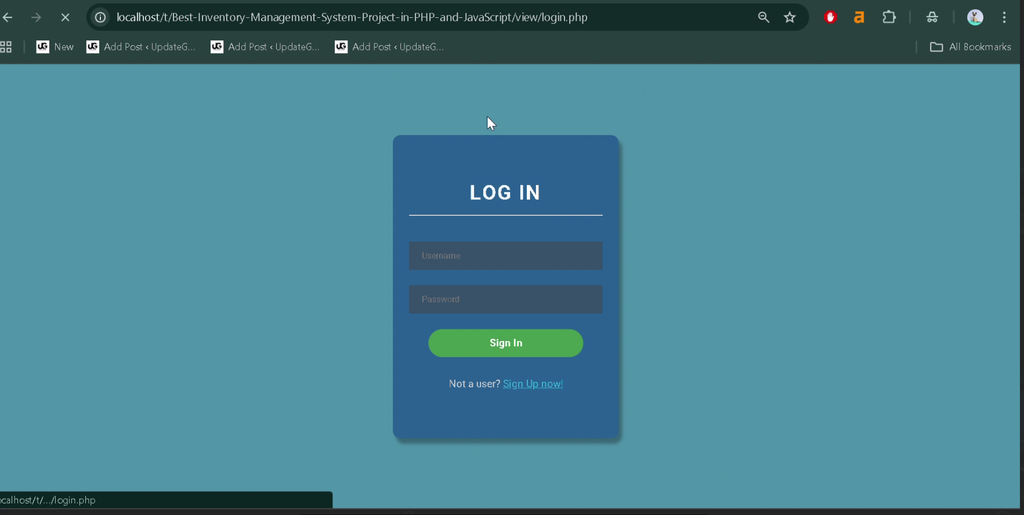
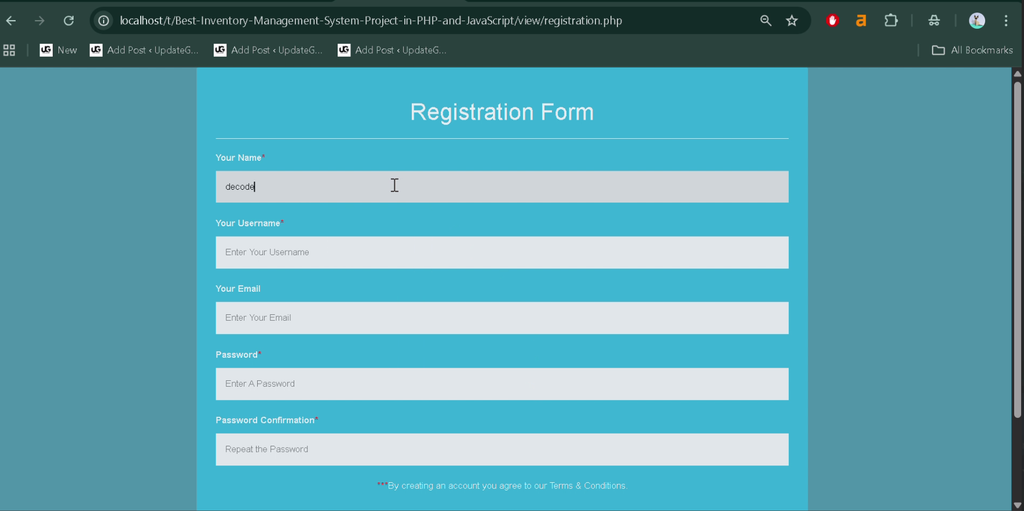
The authentication module provides login and registration functionality for accessing the application. Registration validation helps prevent duplicate or invalid data entries, while password-handling mechanisms support account security.
2. Product Management
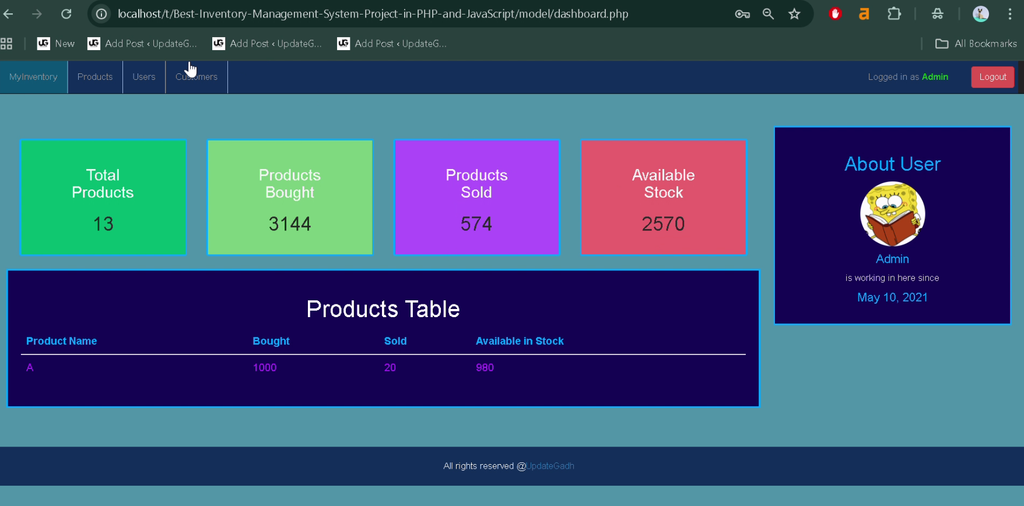
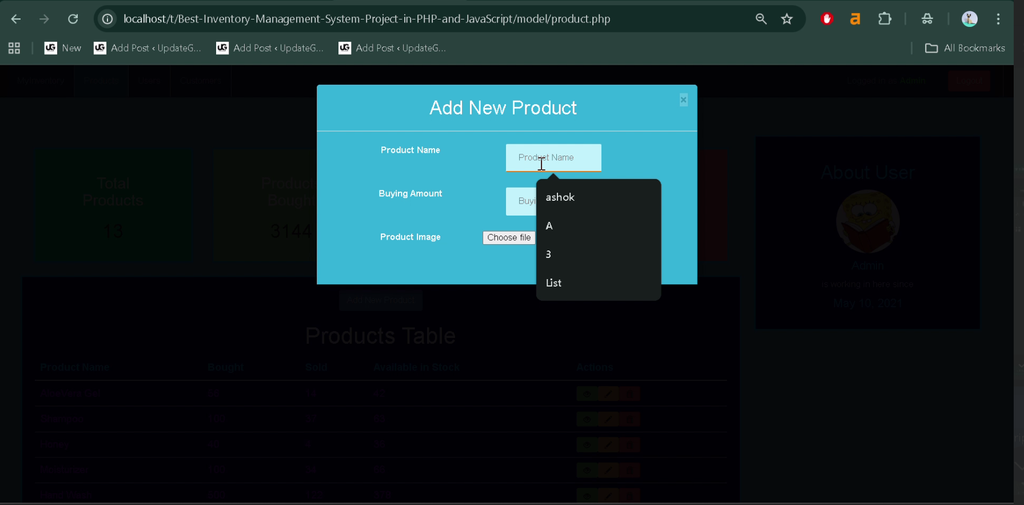
The product management module allows administrators to add, view, edit, and delete product records. Product information can include names, prices, descriptions, and images, with records stored in the database for later retrieval.
3. Customer Management
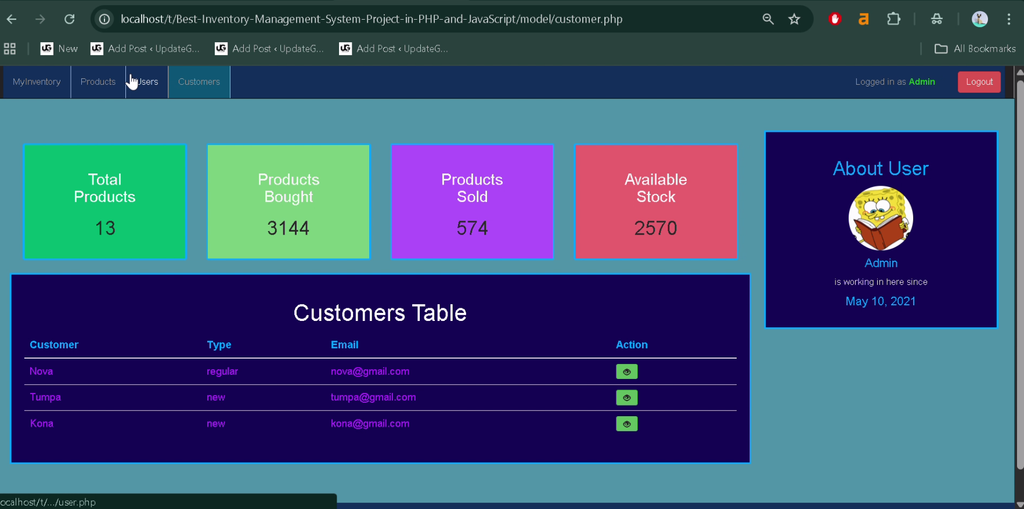
The customer management module helps users store, view, and organize customer information. Administrators can retrieve specific customer records and maintain the information required for inventory-related activities.
4. User Management
The user management module allows administrators to view registered users and manage their accounts. This functionality helps organize user information and maintain oversight of application accounts.
How to Download
The complete package is available so you can run, study, and submit it with confidence. It includes:
- Full Source Code
- Project Report
- Synopsis
- PPT Presentation
Screenshot
How to Install the Inventory Management System in VS Code?
You can run the project locally using XAMPP, Visual Studio Code, and a web browser. Follow the installation steps below to configure the PHP application and its MySQL database.
Step 1: Install the Required Software
Install the following tools before running the project:
- XAMPP Server for Apache and MySQL.
- Visual Studio Code for viewing and editing project files.
- A web browser
Step 2: Extract the Project Files
Extract the project folder into the XAMPP htdocs directory. The example path provided for this project is:
C:\xampp\htdocs\Inventory_Management_In_PHPStep 3: Start Apache and MySQL
Open the XAMPP Control Panel and start both Apache and MySQL. These services provide the local web server and database environment required to run the application.
Step 4: Create and Import the Database
Open phpMyAdmin in your browser using the following address:
http://localhost/phpmyadminCreate a database named inventory_project. Import the SQL file located at db/inventory_project.sql inside the extracted project folder.
Step 5: Configure the Database Connection
Open the controller/connection.php file in Visual Studio Code and verify the database connection settings. The supplied project instructions specify the following connection function:
<?php
function connect(){
    $conn = new mysqli("localhost", "root", "", "inventory_project");
    return $conn;
}
?>
If your local MySQL username, password, or database name differs, update the connection settings accordingly.
Step 6: Run the Project
Open your browser and visit the local project URL:
http://localhost/Inventory_Management_In_PHP/If the project folder, database import, and connection settings are correct, the application should open in your browser.
How to Use the Inventory Management System?
The project supports administrator and registered-user workflows, while customer information is maintained as inventory-related records. Available actions depend on the permissions implemented in the application.
Administrator Role
The administrator manages the application’s main records and can perform the following tasks:
- Log in to the system.
- Add, edit, view, and delete product records.
- View and manage registered user information.
- Maintain customer records.
- Monitor inventory-related information stored in the database.
Registered User Role
Registered users can access the application after registration and login. Depending on the permissions provided by the project, they may be able to:
- Register and log in to the system.
- Add new products when permitted.
- Access available inventory-related functions.
- Update profile details where profile management is implemented.
Customer Records
Customer information can be added and viewed through the available management interface. These records help organize customer details related to inventory operations.
Why Is This Project Useful for Students?
The Inventory Management System is a useful learning project for students who want to understand PHP development, database connectivity, and CRUD operations. It combines several common web application features in a single project.
- PHP Development: Learn how server-side code processes application requests.
- MySQL Database Management: Understand how application records are stored and retrieved.
- CRUD Operations: Practice creating, reading, updating, and deleting records.
- Authentication: Explore login, registration, and validation workflows.
- JavaScript: Understand frontend interactions in a web application.
- Practical Learning: Study how products, customers, and users can be managed digitally.
How Can You Improve the Inventory Management System?
The project can be extended with additional functionality to support more inventory workflows. Possible improvements include stock quantity tracking, low-stock alerts, sales reports, inventory movement history, and additional user roles.
These are suggested enhancements rather than confirmed existing features. Students should implement and test them before including them in their project documentation.
Frequently Asked Questions (FAQs)
1. Which technologies are used in the Inventory Management System?
The project uses PHP, JavaScript, and MySQL. PHP handles backend processing, JavaScript supports frontend interactions, and MySQL stores application data.
2. Which database is required to run the project?
The project uses MySQL, with the database named inventory_project in the supplied installation instructions.
3. What are the main features of this project?
The main features are user authentication, product management, customer management, and user management.
4. Can this project run using XAMPP and VS Code?
Yes. You can edit the project in VS Code and run it locally through XAMPP after importing the database and configuring the connection settings.
5. Is this project suitable for BCA students?
Yes. It is suitable for BCA, MCA, and other computer application students who want practical experience with PHP, MySQL, authentication, CRUD operations, and database-driven web applications.
Final Thoughts
The Inventory Management System Project in PHP and MySQL provides a practical introduction to building a database-driven web application. Its product, customer, and user management modules demonstrate how programming and database technologies can help organize information digitally.
Related Search Keywords: Inventory Management System Project in PHP, inventory management system using PHP and MySQL, inventory management project documentation, inventory management system PHP source code, inventory management project in PHP and JavaScript.