AI Based Traffic Management System || (YOLO + OpenCV) Dynamic Signal Timing + Ambulance Priority
Final year students! Want a project that looks real, works real, and scores high in viva? Then this AI Traffic Management System based on real GitHub source is your best choice. This system doesnt just detect cars it dynamically adjusts signal timing by analyzing vehicle density using AI. And yes dynamic modeling boosts traffic throughput by over 35% compared to static signals.
What This Project Is About
Traffic jams are a daily pain. Most traffic signals still run on fixed timers (like 30 sec for each lane) even when there are few vehicles. This project solves that by using AI to analyze video feeds and decide how long each signal should stay green based on lane traffic density.
- Dynamic Signal Timing: Adjusts green signal time automatically based on traffic density.
- AI-Assisted Traffic Flow: Uses image recognition to calculate vehicles in each lane.
- Graph & Simulation: See performance comparison between static vs dynamic traffic models.
- Edge Compute Ready: The logic can run at the junction itself with minimal cost.
Project tutorials, coding guides & placement tips for students.
Problem Statement
Traditional traffic lights work with fixed timers and do not adapt to real-time traffic conditions. So even when a lane is empty or has just a few vehicles, the green signal stays on for the same time. This wastes time, fuel and patience.
Why This AI Based Traffic Management Project is NEW
Most AI traffic projects show object detection or vehicle counting only. But this one goes further:
- Dynamic Traffic Signals: Not only detect traffic it decides how long each lane should get green time
- Performance Comparison: It actually compares static vs dynamic models using simulation and graphs
- Edge AI Concept: Designed to run close to traffic signals (edge computing), reducing delay and cost
This kind of traffic flow optimization via simulation and AI control is extremely useful for smart city projects
Real-World Use Cases
- Smart city traffic intersections
- Reducing waiting time at lights for commuters
- Reducing fuel consumption and minimizing pollution
- Future integration with real CCTV cameras in cities
Key Features
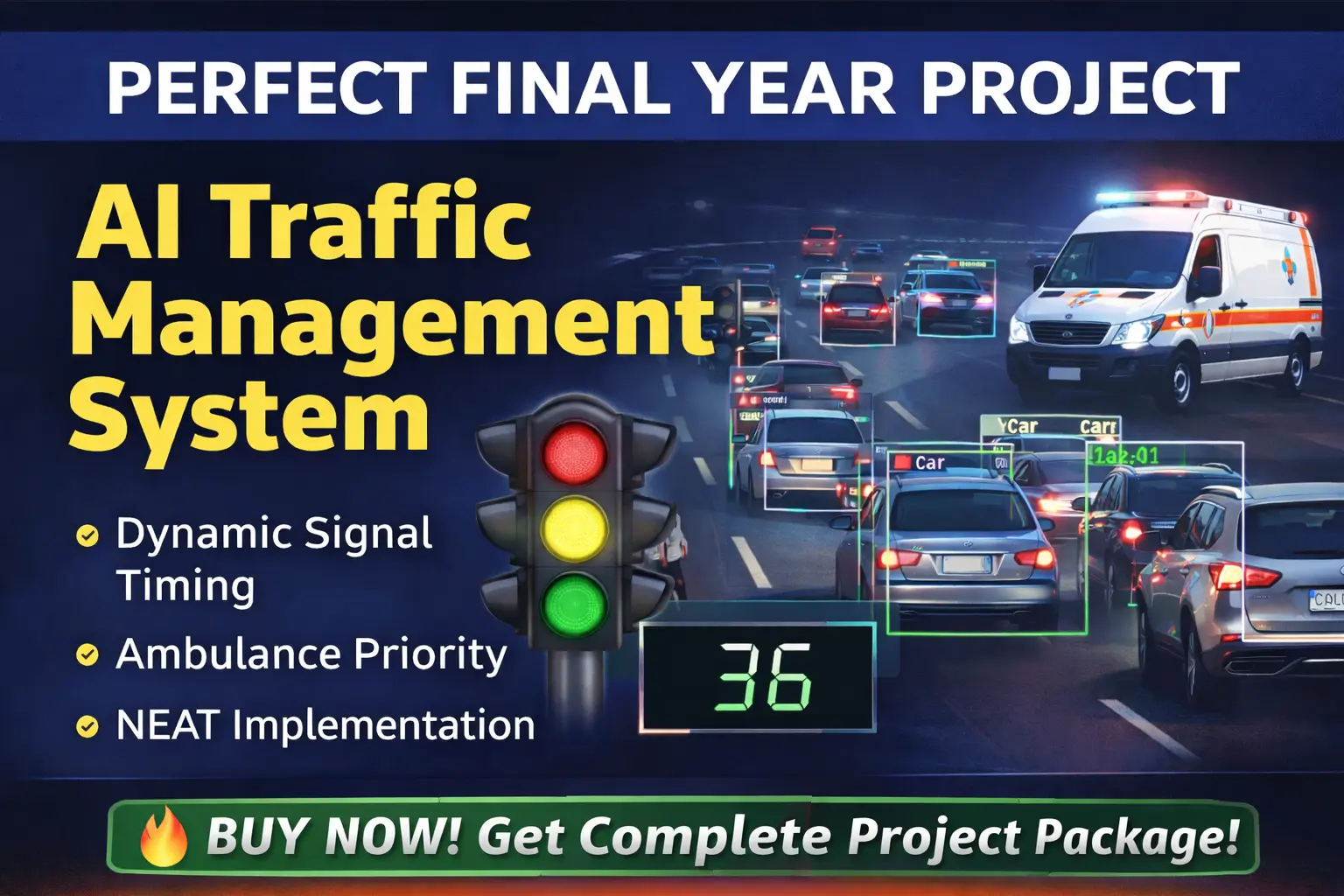
- Traffic Density Calculation: Uses image detection to measure real traffic density
- Dynamic Model Simulation: Shows how dynamic signal timing improves flow
- Static vs. Dynamic Comparison: Static signals vs AI-controlled signals comparison using graphs
- NEAT AI Integration: Includes structural AI modeling to coordinate signals intelligently
- Graph Visualization: Visual graph to compare total vehicles passed per hour
- Edge Computing Support: Can be deployed on tiny AIS traffic systems
How It Works
Step 1: Capture Traffic Video Feed
Use static or simulated video sources for testing. You can reuse sample traffic videos or use CCTV style feeds during demo.
Step 2: Image Detection & Traffic Density Estimation
An AI model (based on Python vision libraries) counts vehicles in each section of the crossing. The system updates vehicle count in real time.
Step 3: Dynamic Signal Logic
Instead of a fixed timer, the signal time is decided based on current traffic density. More vehicles = longer green time. Less traffic = shorter green time. This improves overall flow.
Step 4: Simulation & Performance Results
After running 12 cycles of simulation (5 min each), the dynamic model passed roughly 3193 vehicles compared to 2356 for the static system thats over a 35% improvement in throughput.
Technologies Used
- Python
- AI Model for image recognition
- NEAT-based logic (NeuroEvolution of Augmenting Topologies)
- Pygame / Matplotlib for visualization
- Graph visualization for performance comparison
Project Demo Highlights
- Performance Comparison Graph (Dynamic vs Static)
- Simulation Videos showing how signals adapt
- Real Time Vehicle Density Display
Viva Preparation Questions (3 Most Important)
- Why is dynamic signal timing better than static timing?
Because static timing wastes green time when traffic is low and causes delays when traffic is heavy. Dynamic timing balances flow based on real density. - What is the role of AI in this system?
AI is used to analyze images, estimate vehicle counts, and decide optimal signal timing instead of fixed timers. - What performance improvement did you observe?
The dynamic AI model passed more vehicles per hour over 35% higher than the traditional static model in simulation tests.
Want Complete Source Code + Documentation?
If you are a final year student and want a ready-to-run project (with proper documentation, simulation setup, dashboards, and explanation), then this AI Traffic Management System is available as a complete package.
- Full Python project with simulation and graphs
- Detailed installation instructions
- Dynamic signal timing logic explained
- Complete PPT + Documentation
Keywords: dynamic traffic signal timing, Python AI traffic project, traffic density AI, GitHub traffic management AI project, final year Python project AI ,AI Based traffic management systemai based traffic management system india’s first ai based traffic management system smart ai based traffic management system which city launched india’s first ai based traffic management system
bangalore ai based traffic management system
where was india’s first ai based traffic management system launched
ai based traffic management system project source code
ai based traffic management system github
ai based traffic management system research paper
ai and traffic management